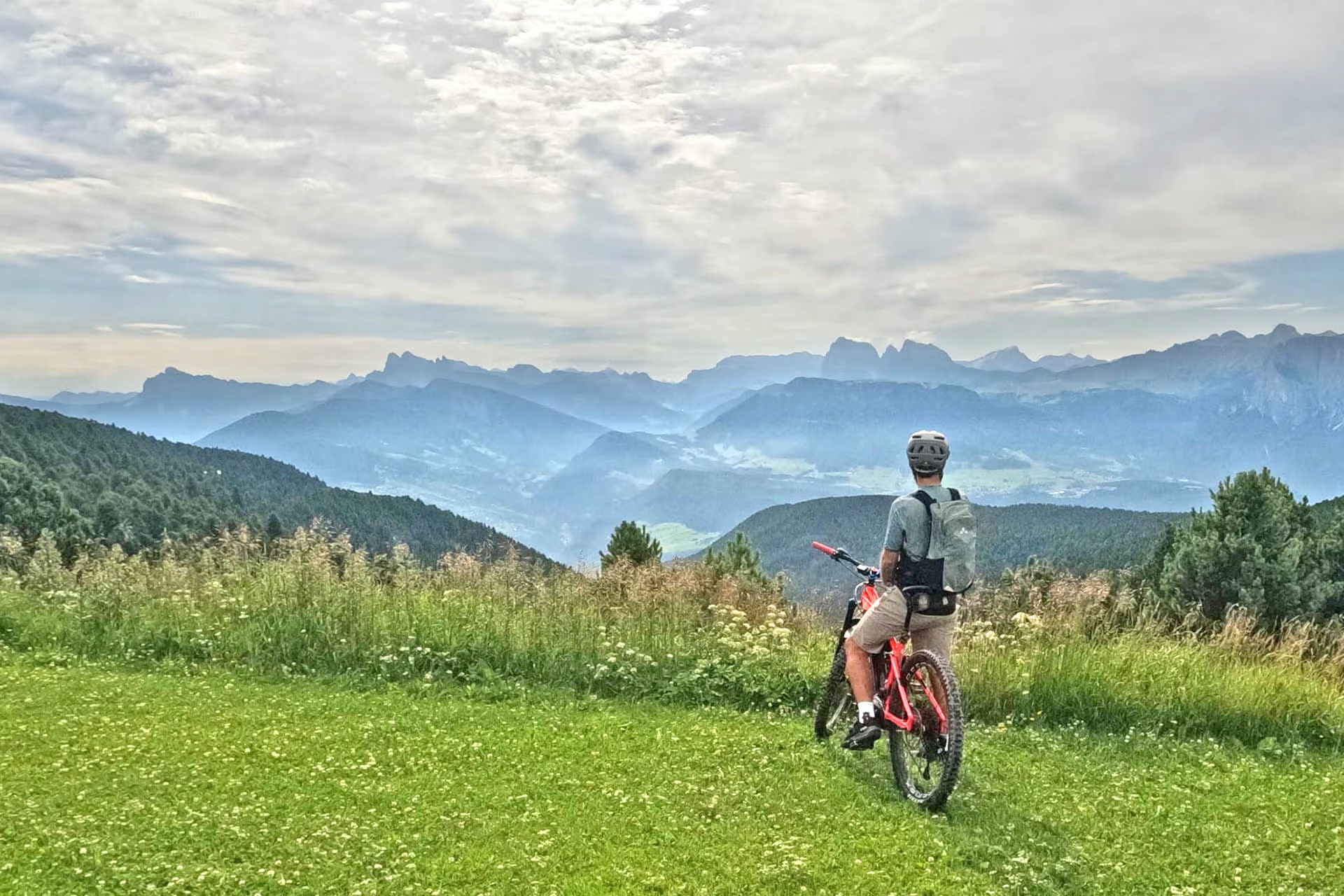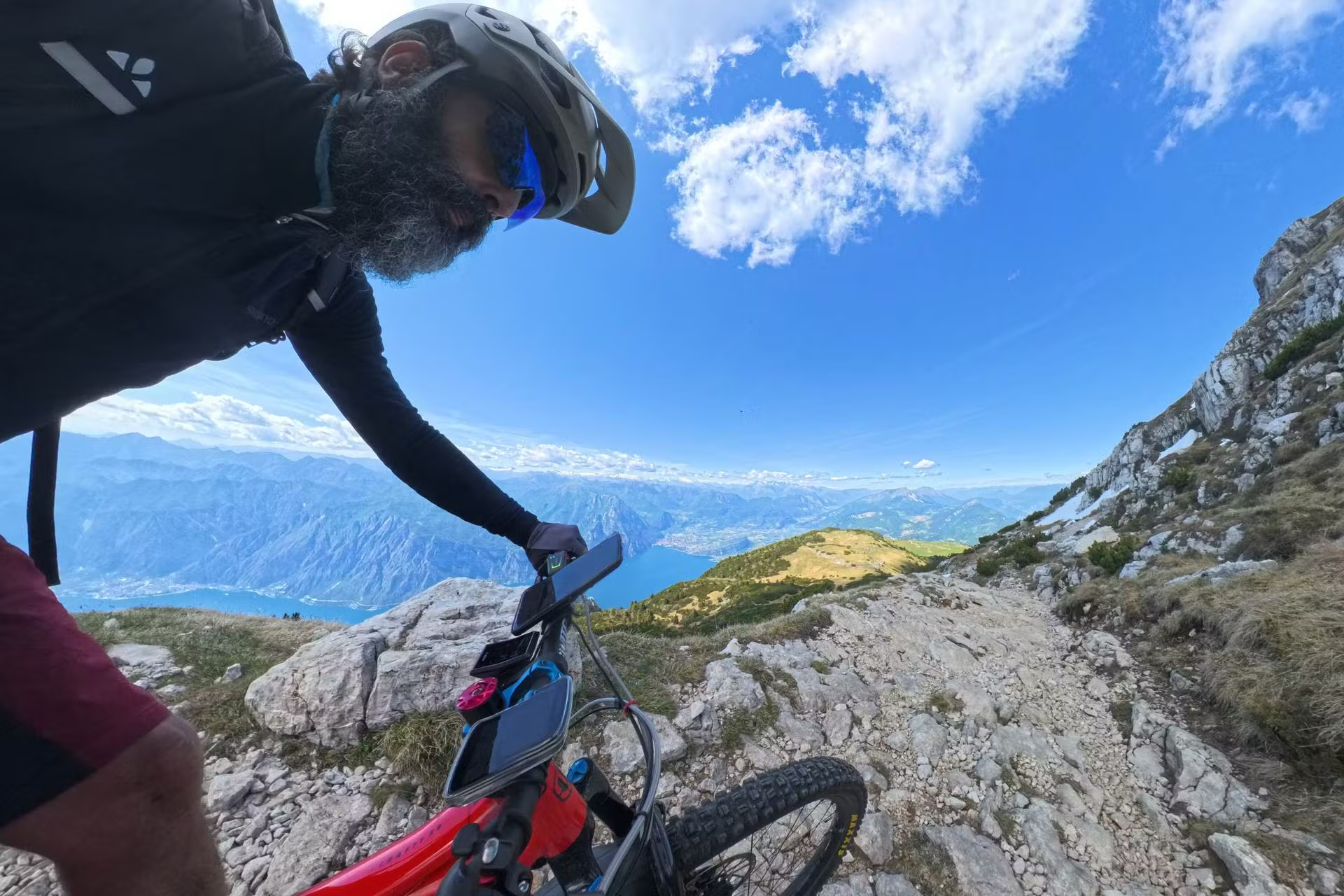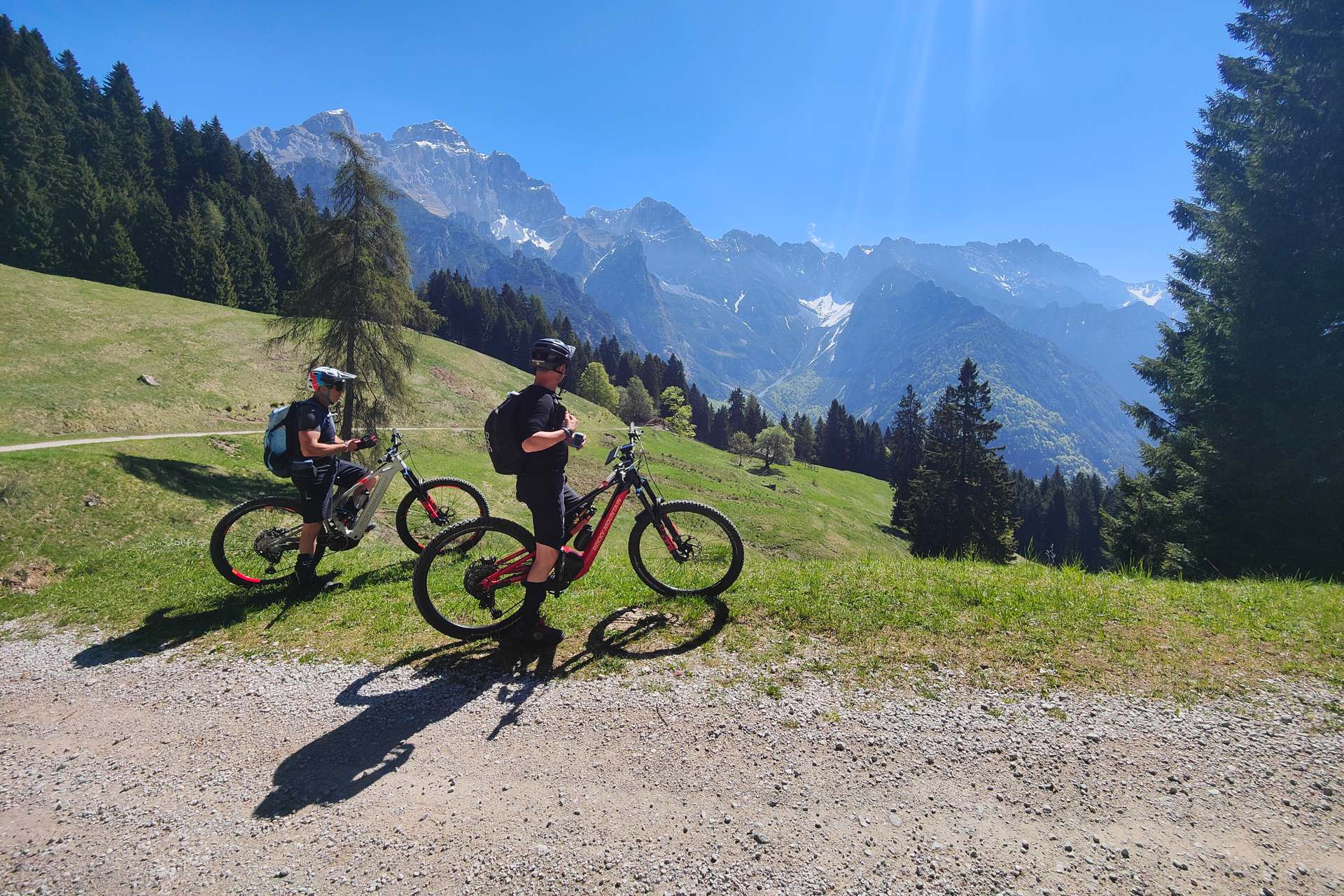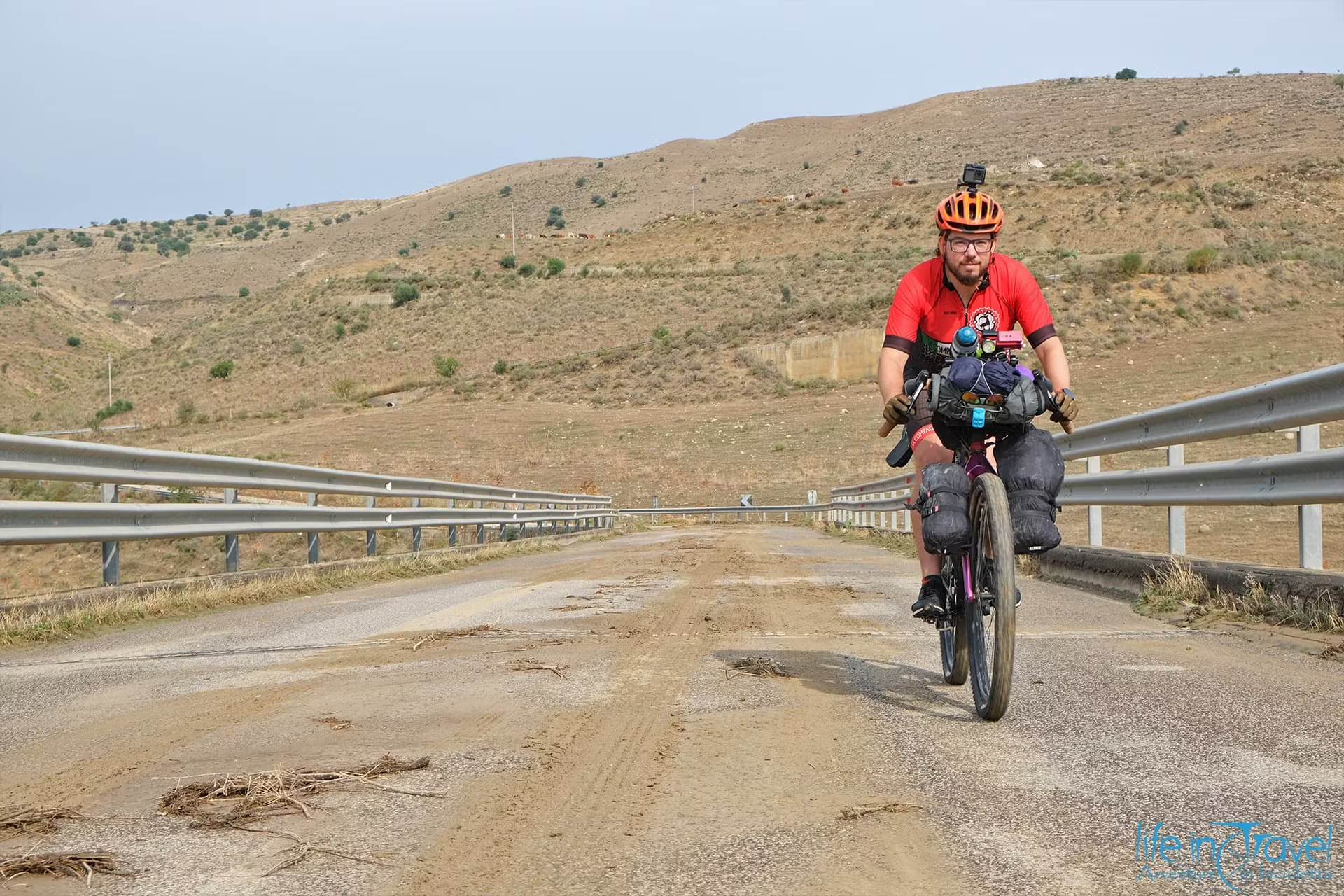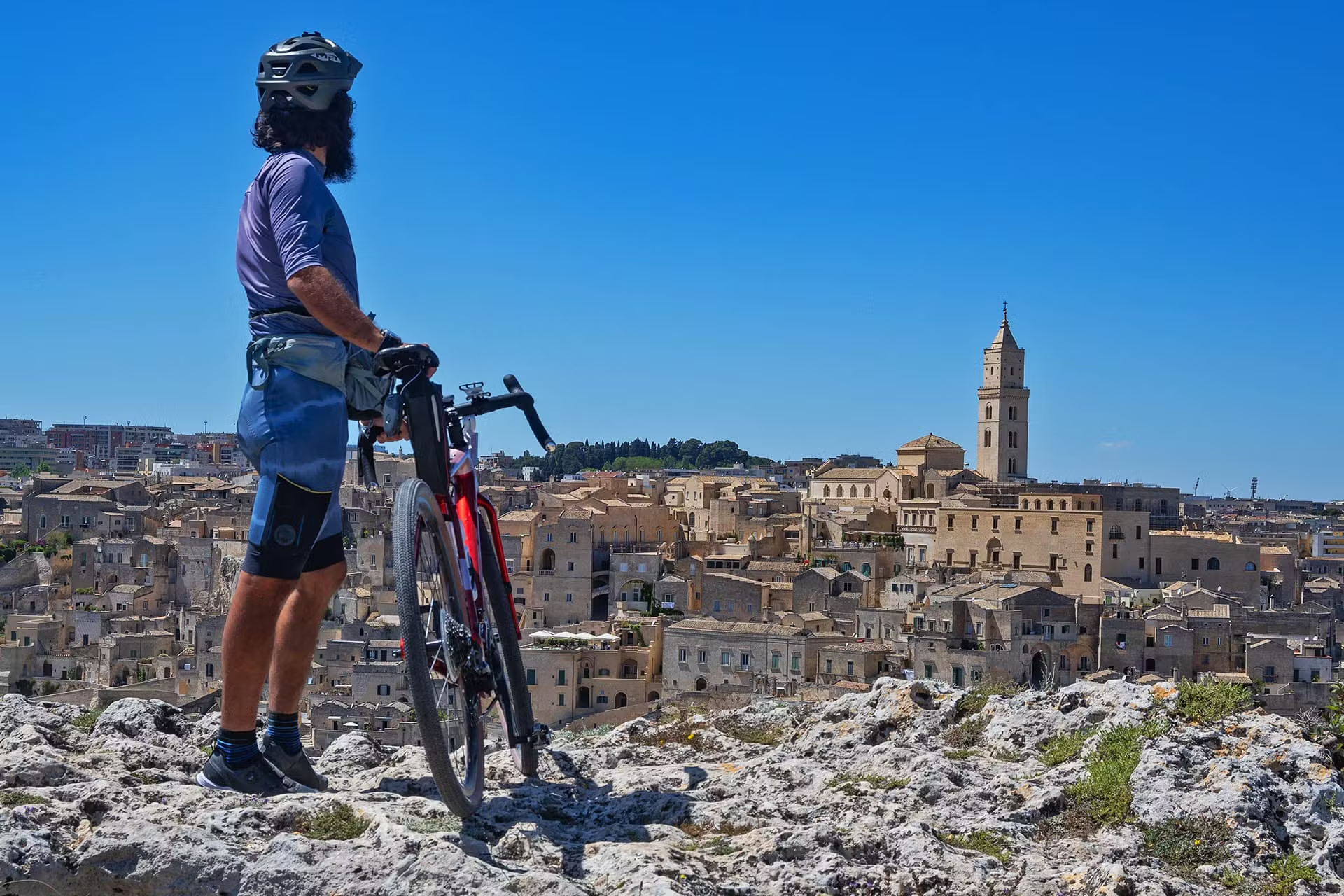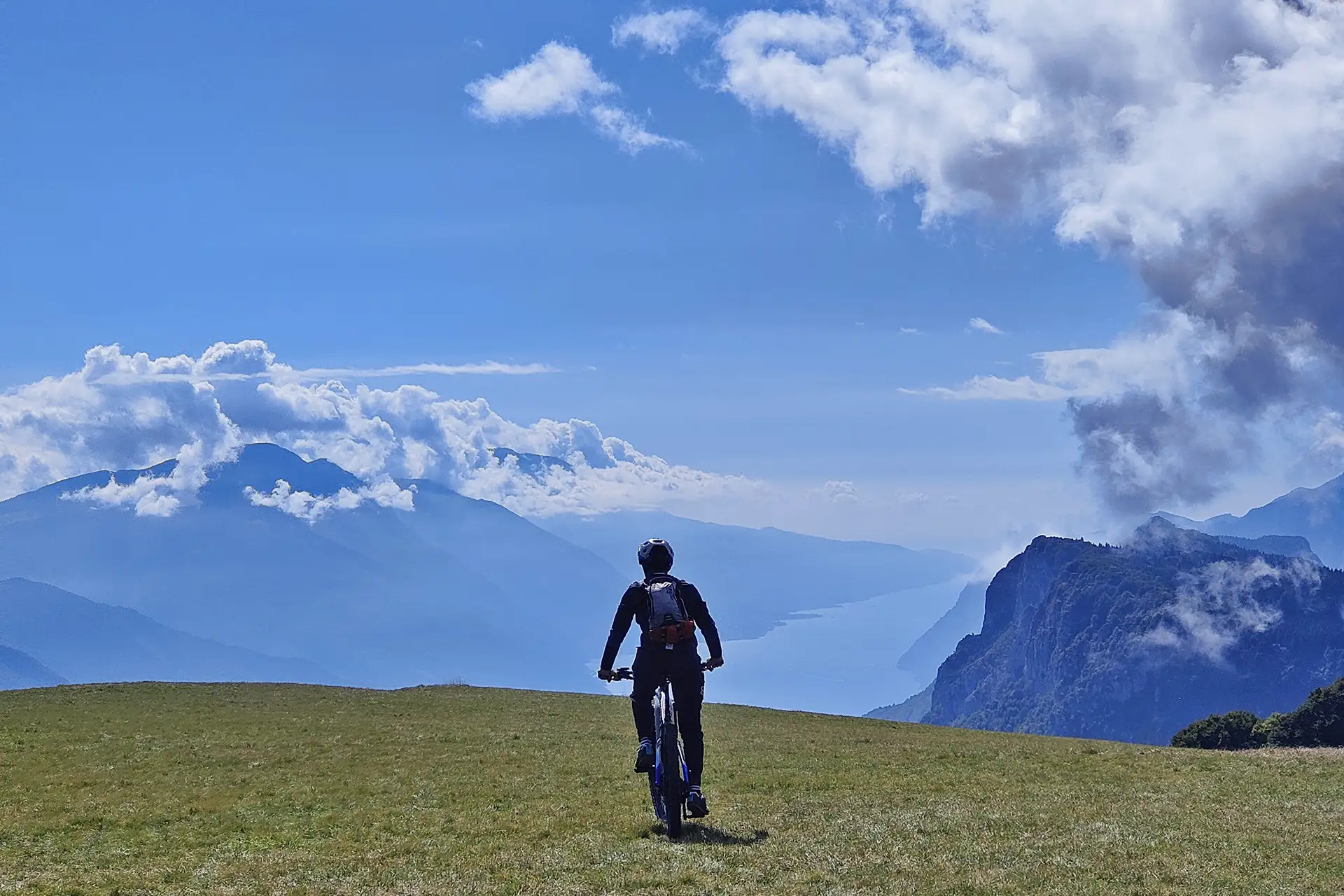
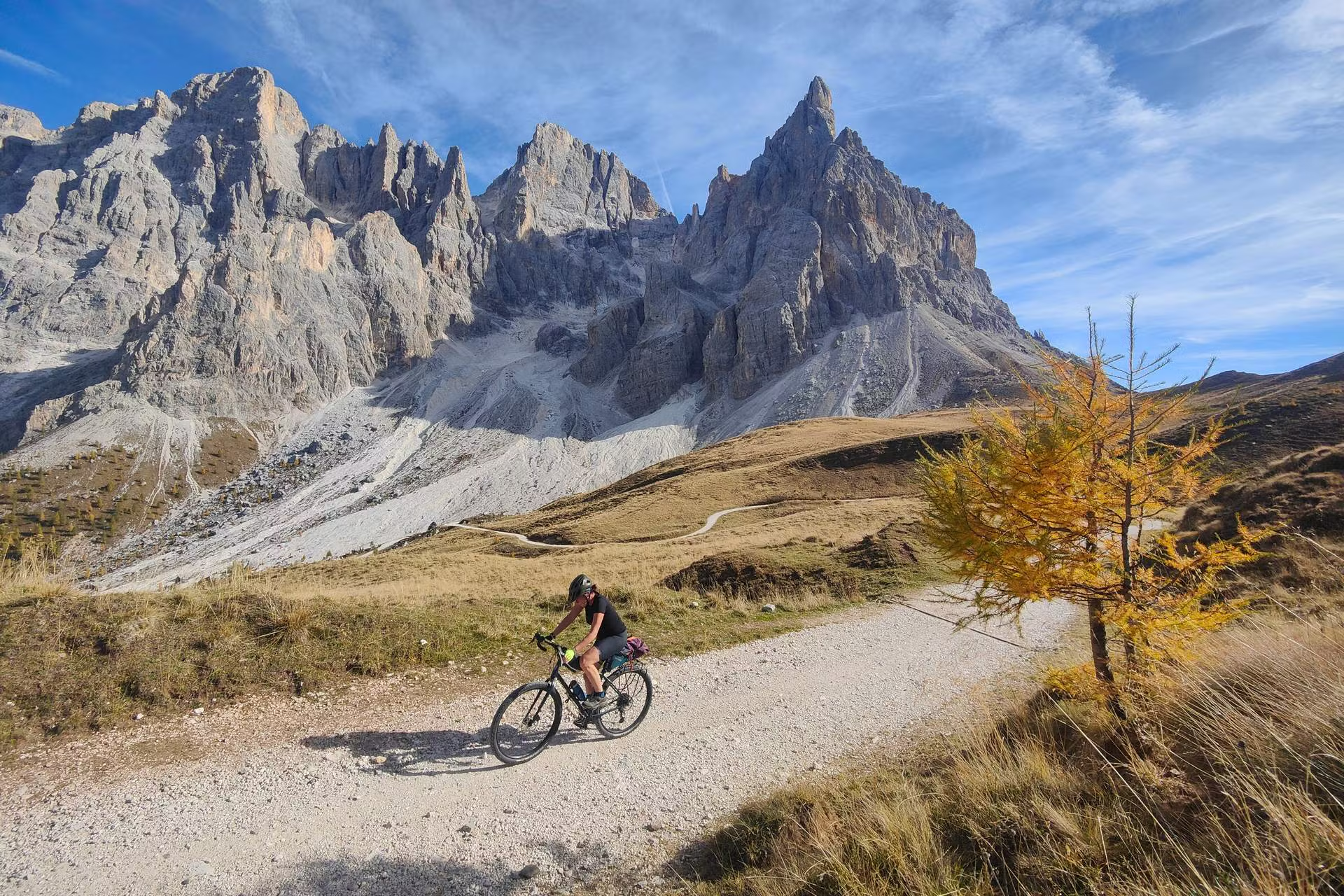
Trentino offers an extraordinary network of forest roads, military tracks, and high-altitude trails that represent a true paradise for mountain gravel lovers. Far from traffic and immersed in vertical nature, the routes traversing the Dolomite valleys offer great emotions to those who choose to explore the region on wide-ranging loop rides. Here is one right at the foot of the Pale di San Martino.
In this article
- The Autumn Magic of the Dolomites
- From Predazzo to Bellamonte and the Climb to Lusa Pass
- The Paneveggio Reserve and Entering Val Venegia
- Baita Segantini and the Masterpiece of the Pale di San Martino
- The Descent Begins: Capanna Cervino and Malga Juribello
- The Grand Finale: Lake Paneveggio, Travignolo Stream, and Sottosassa Canyon
There are places where nature seems to express itself through its highest form of art, carving stone with light and painting forests with a color palette that changes at every hour of the day. This loop itinerary, which winds between Val di Fiemme and the majestic Pale di San Martino, represents one of the most extraordinary cycling and landscape experiences one can ever have.
The Autumn Magic of the Dolomites
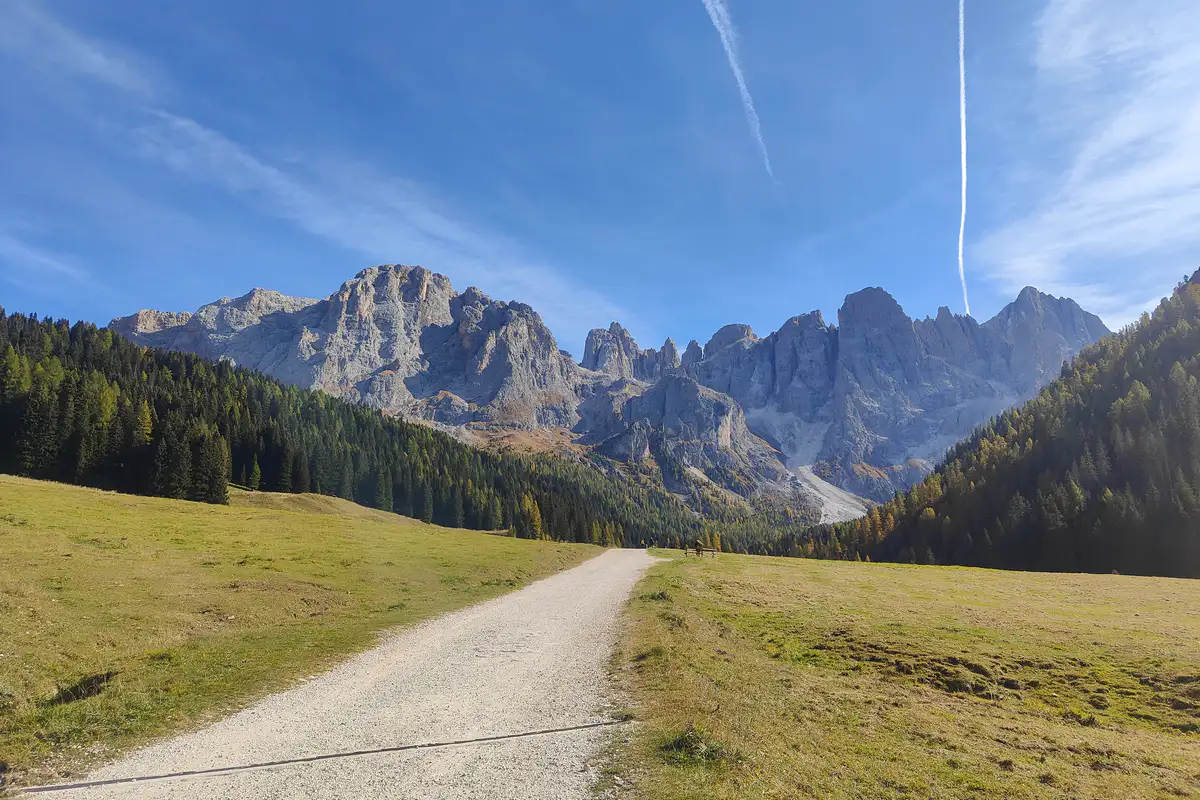
At this time of year, when the air turns crisp and the sky takes on a shade of blue so deep it almost feels unreal, the mountain shows its absolute best. The dolomite spires stand proud and sharp against the horizon, while the larches, turning an intense golden yellow, seem to light up the slopes like natural torches.
When ridden in October, it is a route that combines physical exertion with aesthetic contemplation—a loop ride that tests your legs while deeply nourishing your spirit. Not that this itinerary is any less fascinating at other times of the year, but during this season, the tranquility and colors offer a touch of extra magic!
From Predazzo to Bellamonte and the Climb to Lusa Pass
The starting point of this grand adventure is Predazzo, rightly considered the "geological garden of the Alps", located in the heart of Val di Fiemme. Here, the morning atmosphere is fresh, with frost still covering the meadows and the scents of wood and damp earth blending in the air.
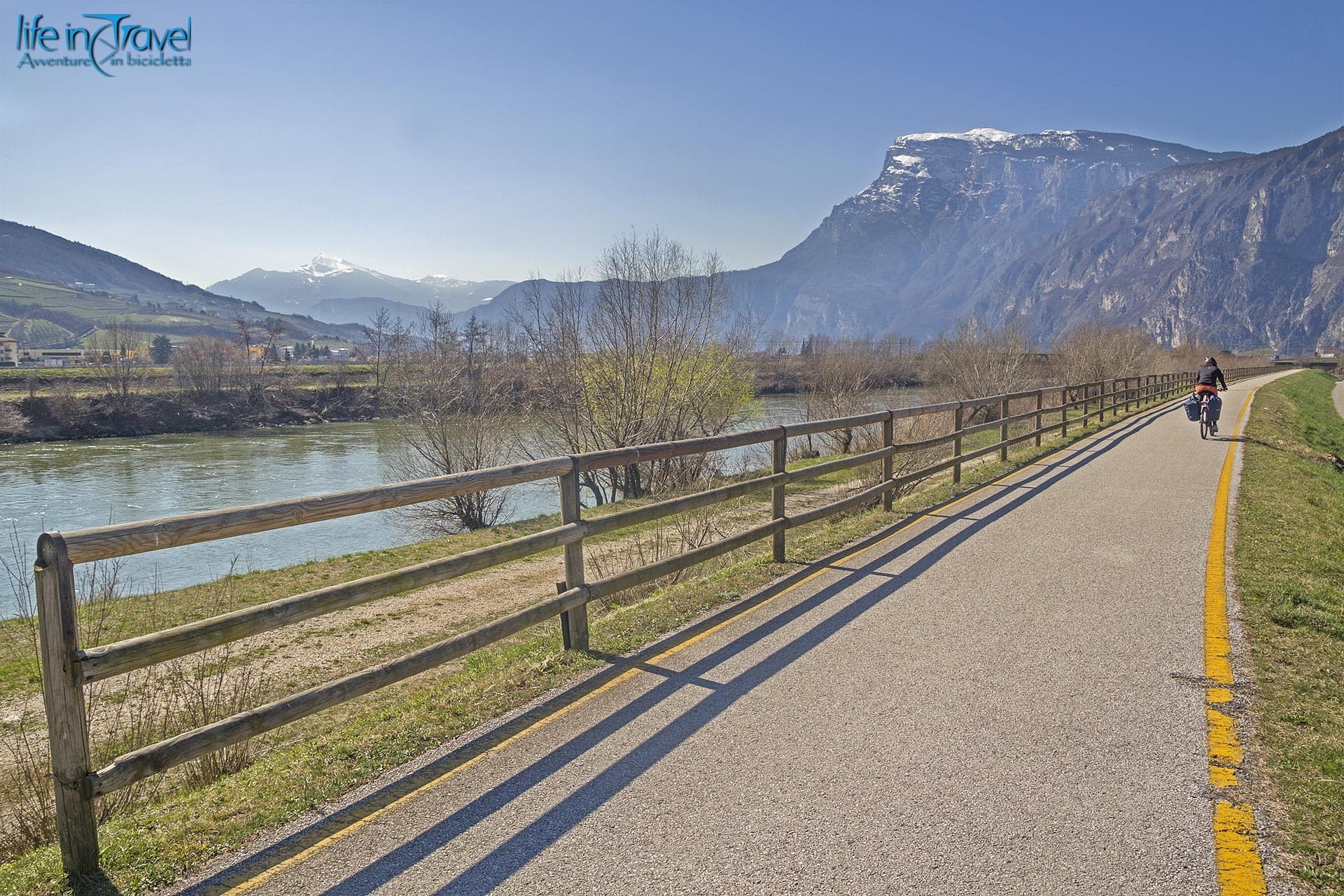
Right after departure, you take the convenient bike path that flows peacefully toward Sottosassa. This first section serves to warm up your muscles and get into sync with the pedaling rhythm. The track winds gently along flat terrain, accompanied by the reassuring sound of the stream running nearby. Soon, however, the flat nature of the route gives way to the day's first real challenge: near Valle Verde campsite, you begin climbing on a secondary paved road that soon intersects the state road heading up toward Rolle Pass.
Upon reaching the village of Bellamonte and having a coffee in the only spot open during this period, you continue a bit further on the state road before turning toward Lusia Pass. From this moment on, the road starts to make its presence felt in your legs. After a hairpin bend, you leave the asphalt behind and abandon the climb to Lusia Pass tackled some time ago in a very similar but somewhat more technical loop (in Italian).
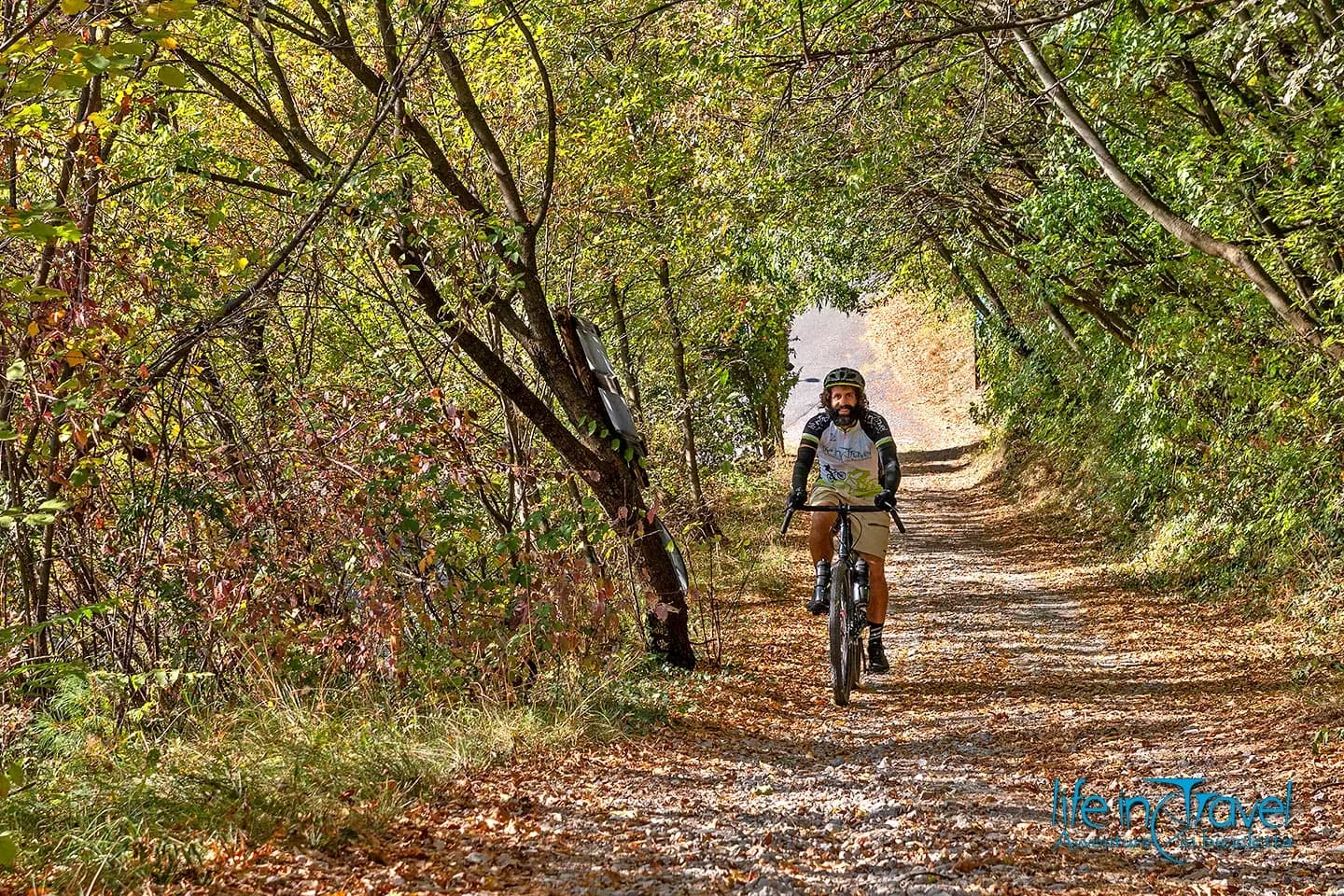
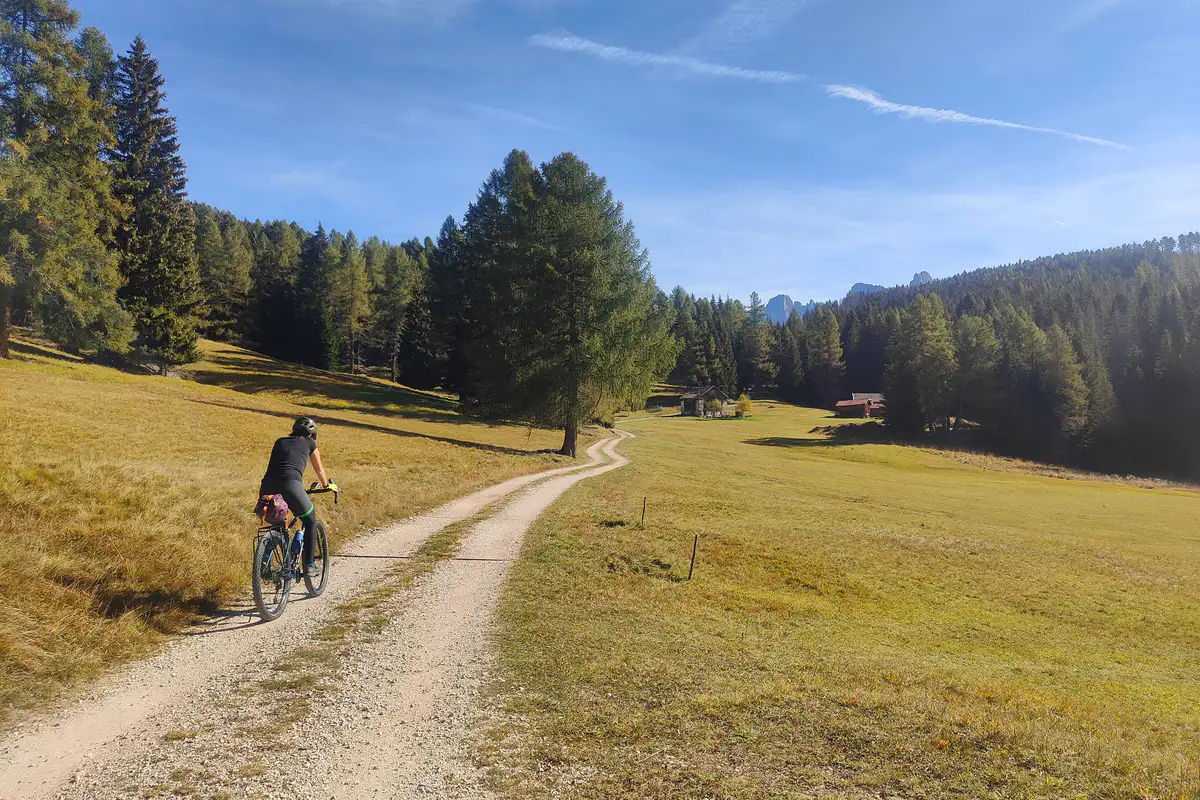
The dirt road you take on the right climbs with manageable gradients until reaching the peak in Carigole. You ride immersed in a fairytale forest, where tall and dense fir trees let the first rays of sunlight filter through, casting patterns of light and shadow on the ground. The alpine environment here shows its most authentic side: high-altitude pastures buzzing with grazing cows in summer, now tinted with ochre and rust hues in autumn.
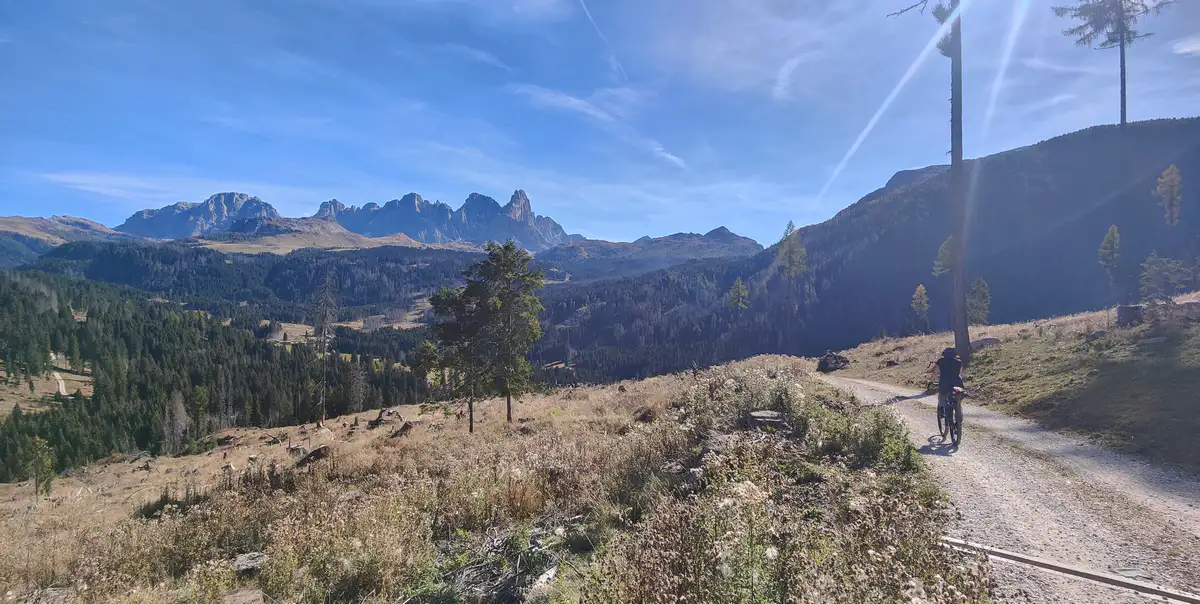
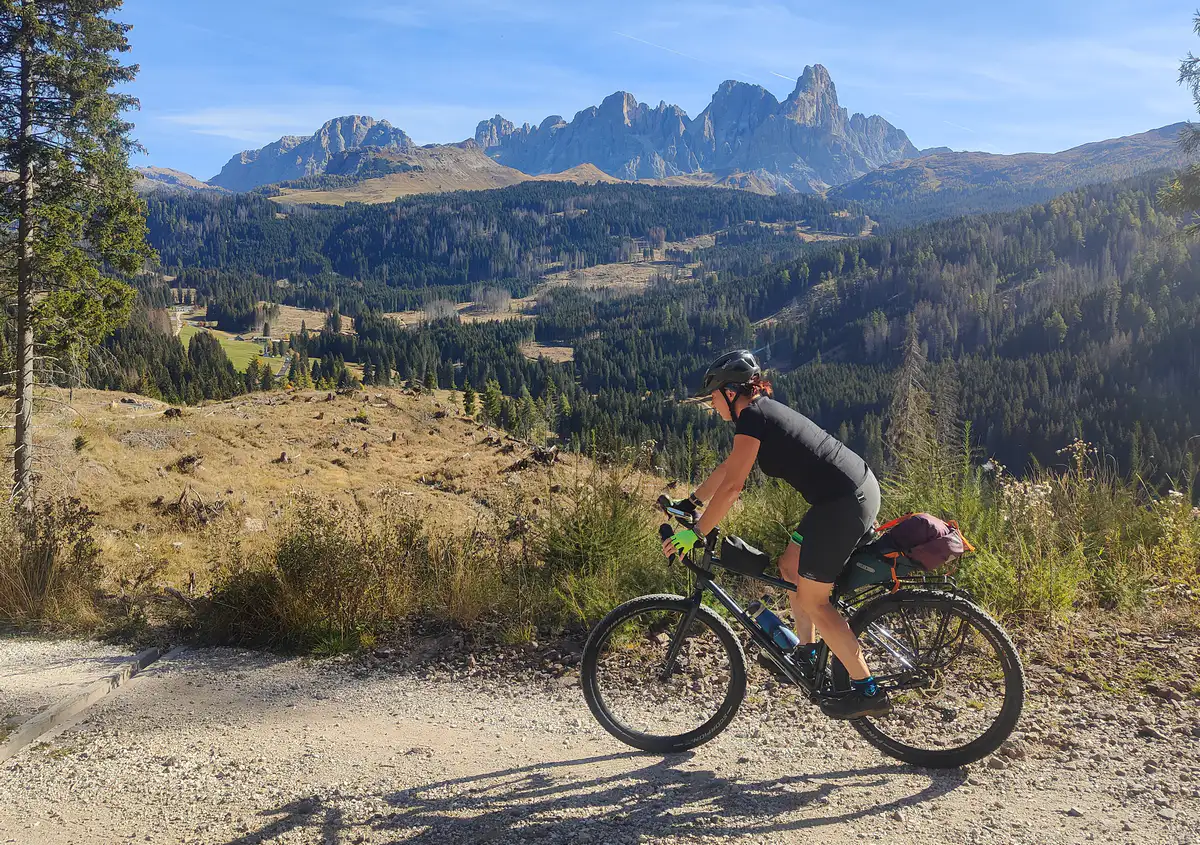
The descent and subsequent rolling terrain leading toward Paneveggio offer moments of pure visual bliss, with views stretching out toward the imposing and silent peaks of the Pale di San Martino group.
The Paneveggio Reserve and Entering Val Venegia
Leaving the ridges of Lusia behind, the itinerary leads us along the edge of the famous Paneveggio Forest—a mythical place also known as the "violin forest", whose resonance Norway spruces were even chosen by Antonio Stradivari to craft his famed instruments. Although the deep marks left by Storm Vaia and the subsequent disastrous bark beetle outbreak are evident, the place remains idyllic, especially without the summer crowds.
Here you cross one of the most fascinating stops for alpine wildlife enthusiasts: the wildlife enclosure dedicated to deer. With a little luck, you might catch a glimpse of majestic specimens moving nimbly among the trees or drinking near the streams, and during this season, you can even hear their rutting calls (bellows).
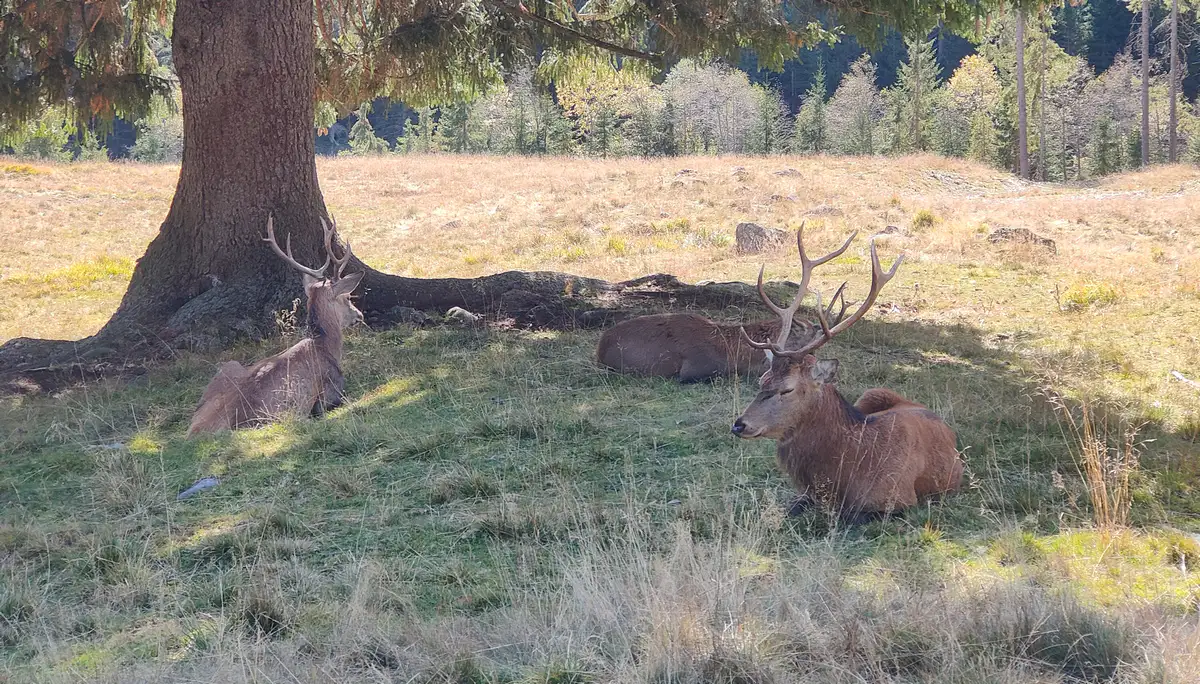
A short stop to greet these splendid animals is a must before getting back in the saddle along the shared cycling and walking trail that branches off a little further ahead beyond the Travignolo stream. This stretch features a few particularly tough and steep ramps that test your endurance, but the effort is the price to pay for gaining access to one of the most spectacular natural sanctuaries in the Dolomites: the entrance to Val Venegia.
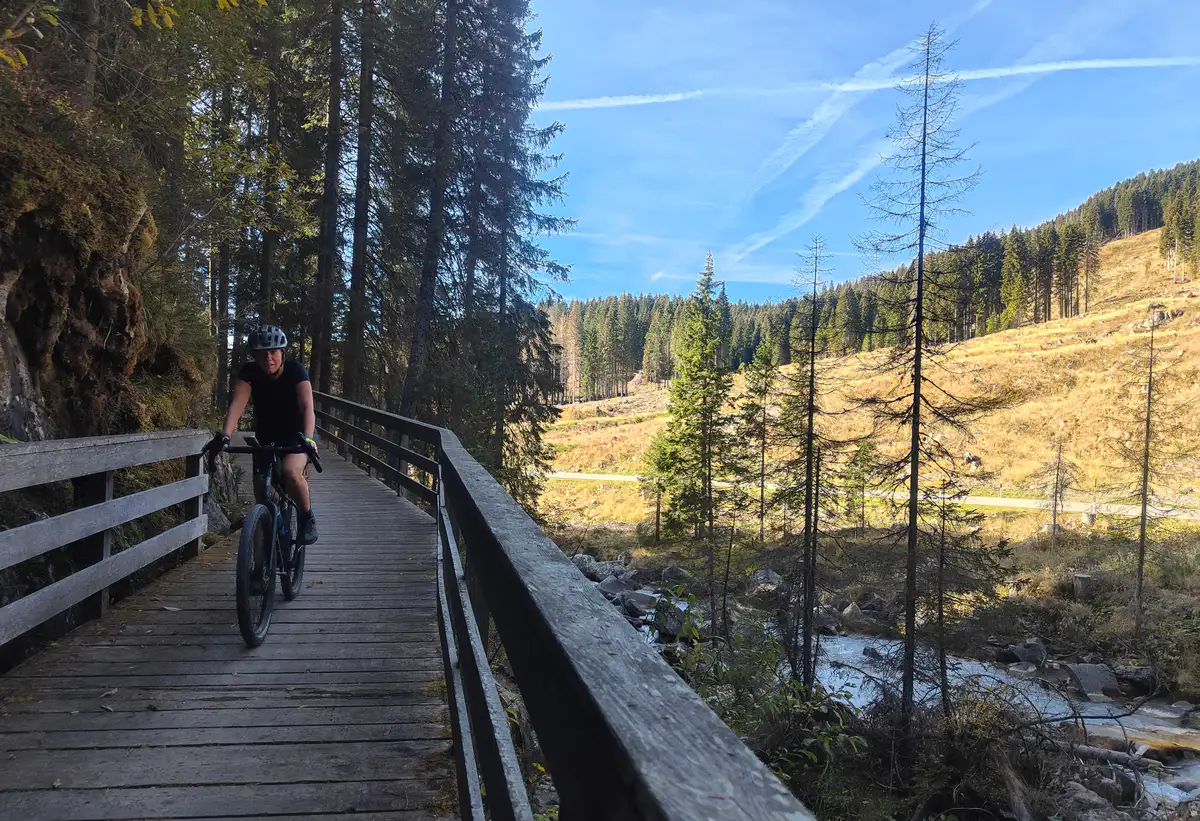
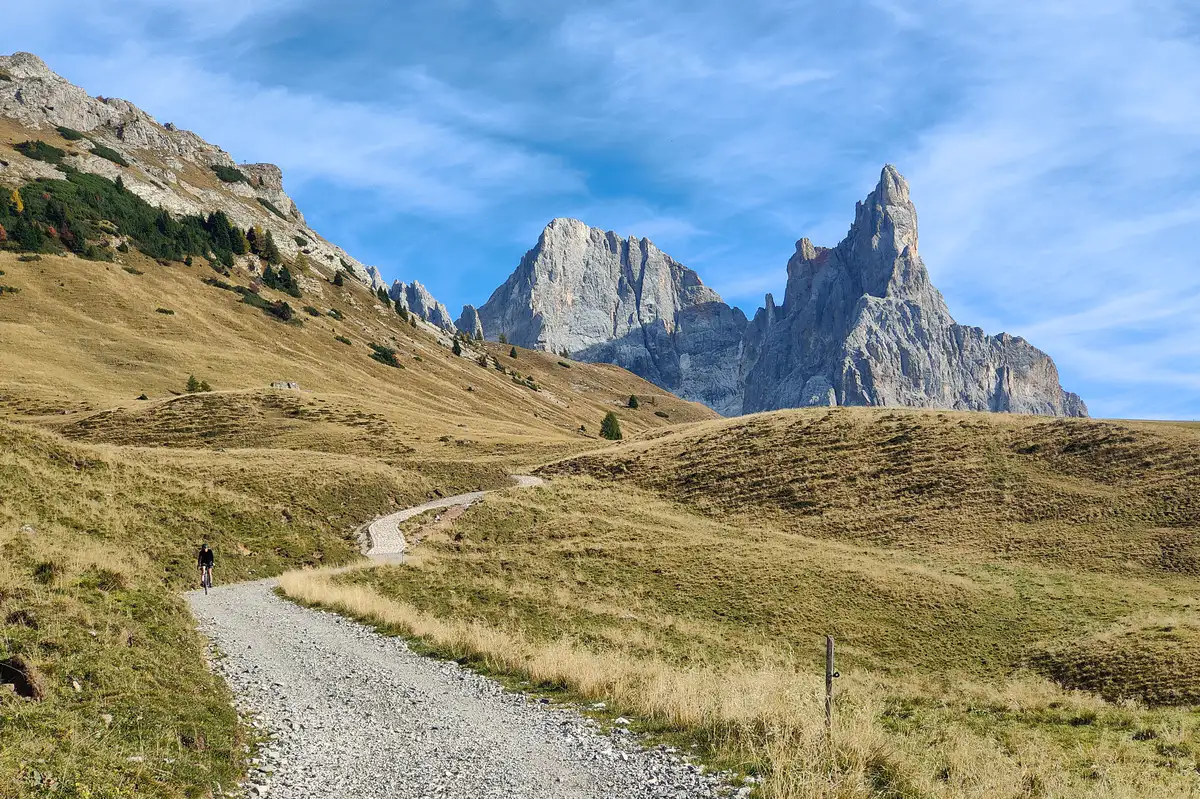
As soon as you enter the valley, the scenery transforms radically. The vegetation thins out to give way to vast mountain meadows crossed by crystal-clear streams, while in the background, towering and majestic, rise the Pale di San Martino.
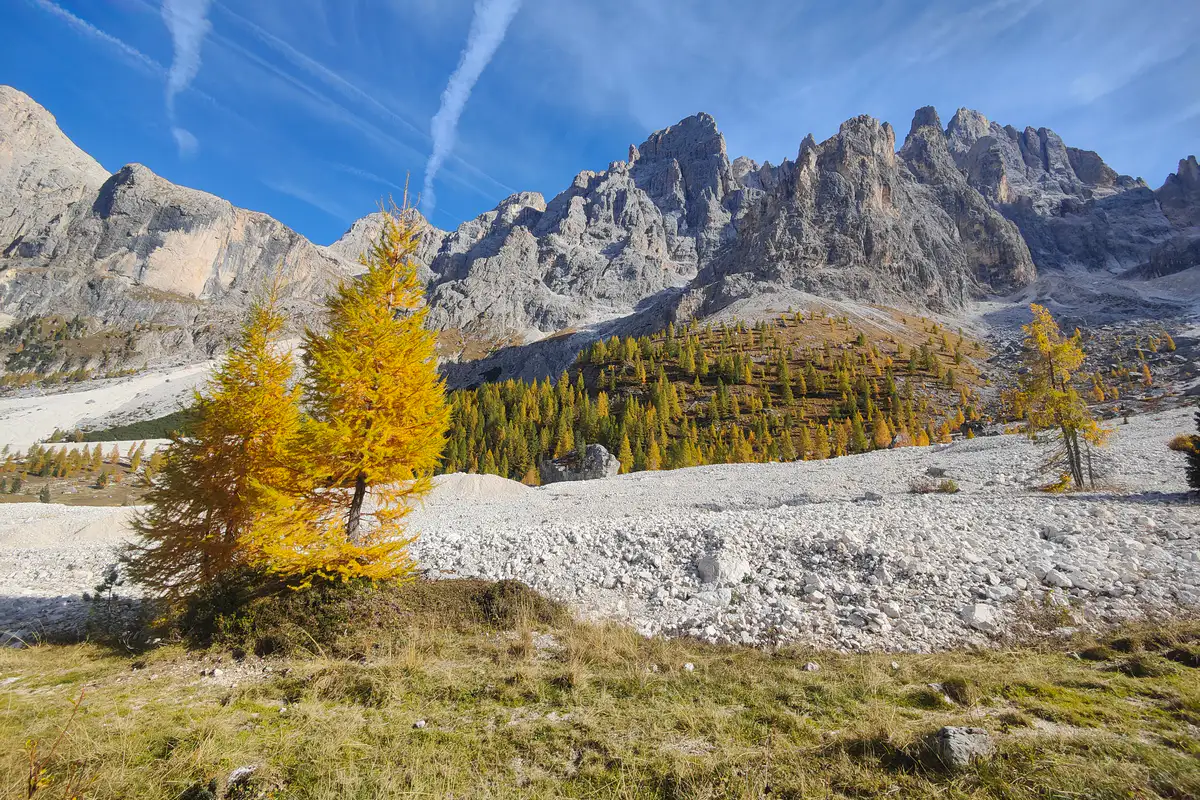
The larches, dressed in their autumn coat, frame the landscape with patches of brilliant yellow, creating an impressive color contrast with the gray-pink Dolomite rock and the cobalt blue sky. Continuing along the valley, a minor setback—a temporary detour required due to maintenance work near Malga Venegiota—forces a momentary dismount and a short hike-a-bike section.
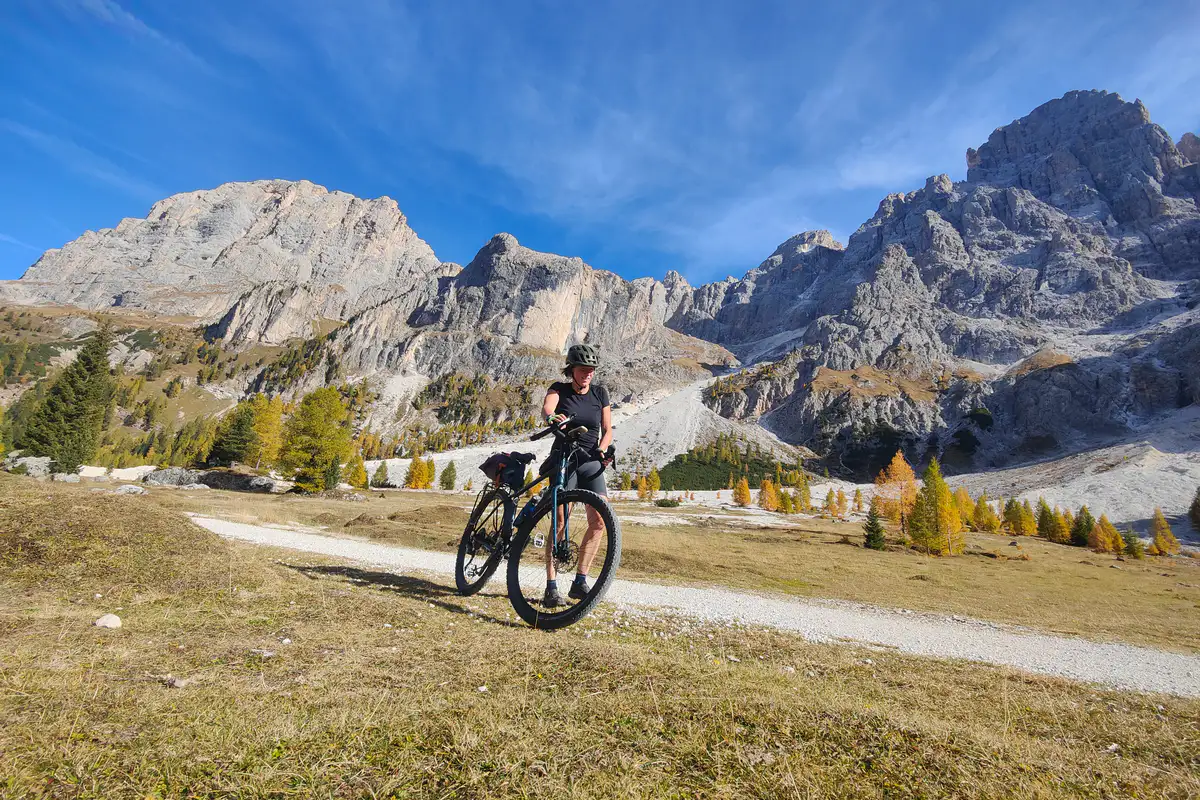
Soon, however, you get back to turning the pedals, heading decisively toward the highest, wildest, and most spectacular point of the entire loop: the pass at Baita Segantini.
Baita Segantini and the Masterpiece of the Pale di San Martino
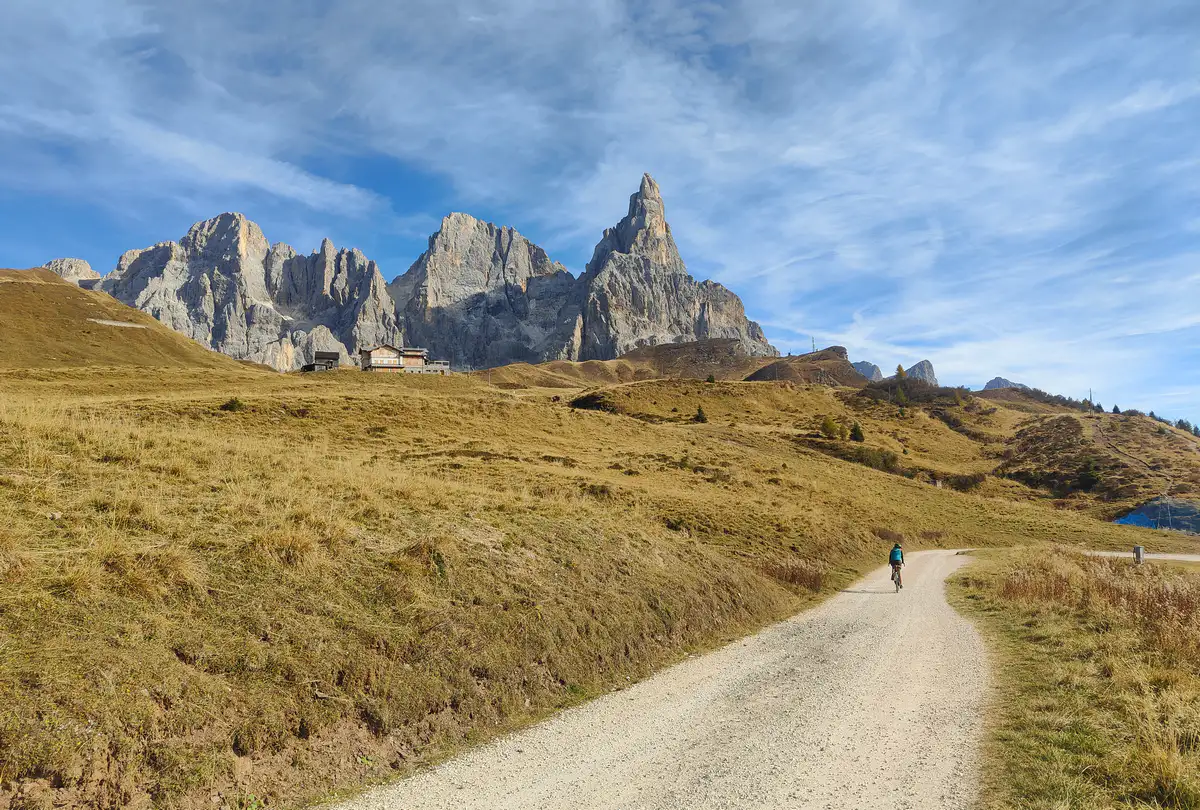
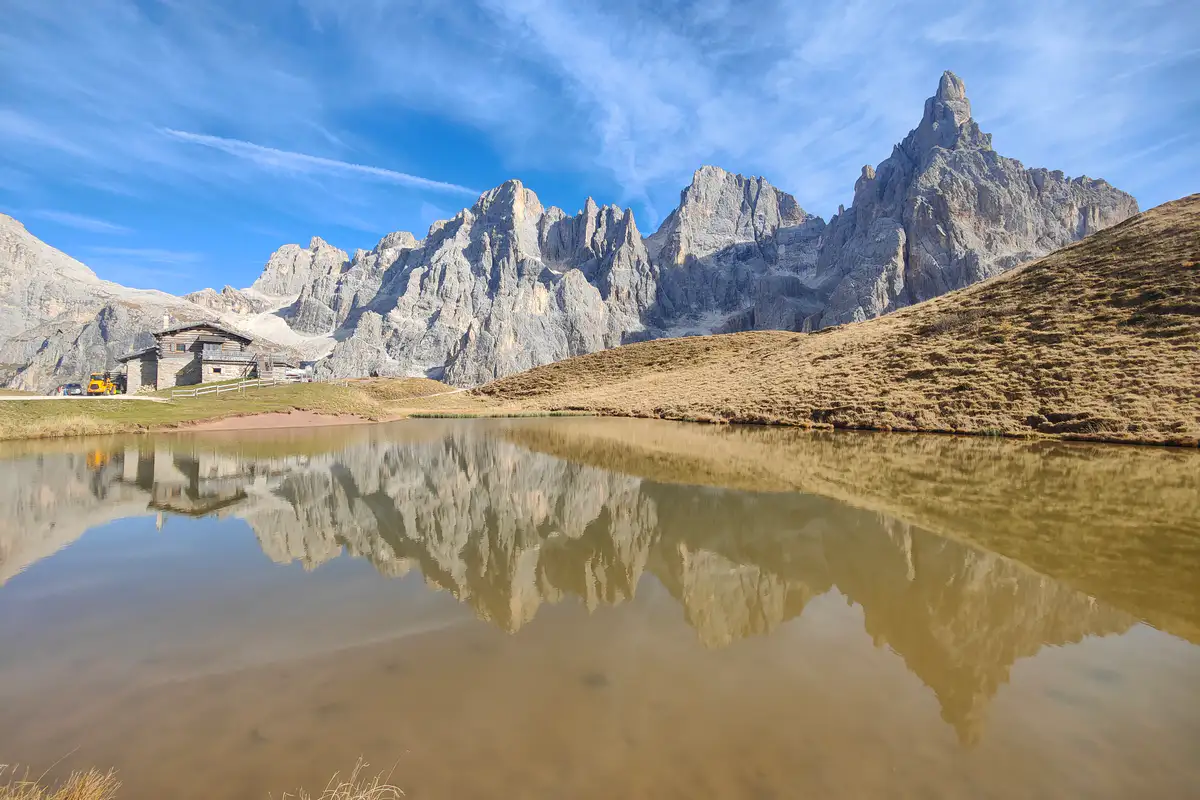
Reaching Baita Segantini means touching the sky with your finger. Situated at over two thousand meters above sea level, this famous high-altitude hut represents a legendary destination for hikers and cyclists from all over.
Right in front of it, beyond the small alpine tarn acting as a natural mirror, stands one of the most famous and photographed postcard views in the entire world: the Cimon della Pala—often referred to as the "Matterhorn of the Dolomites" for its perfect and bold pyramid shape—and the majestic Cima della Vezzana.
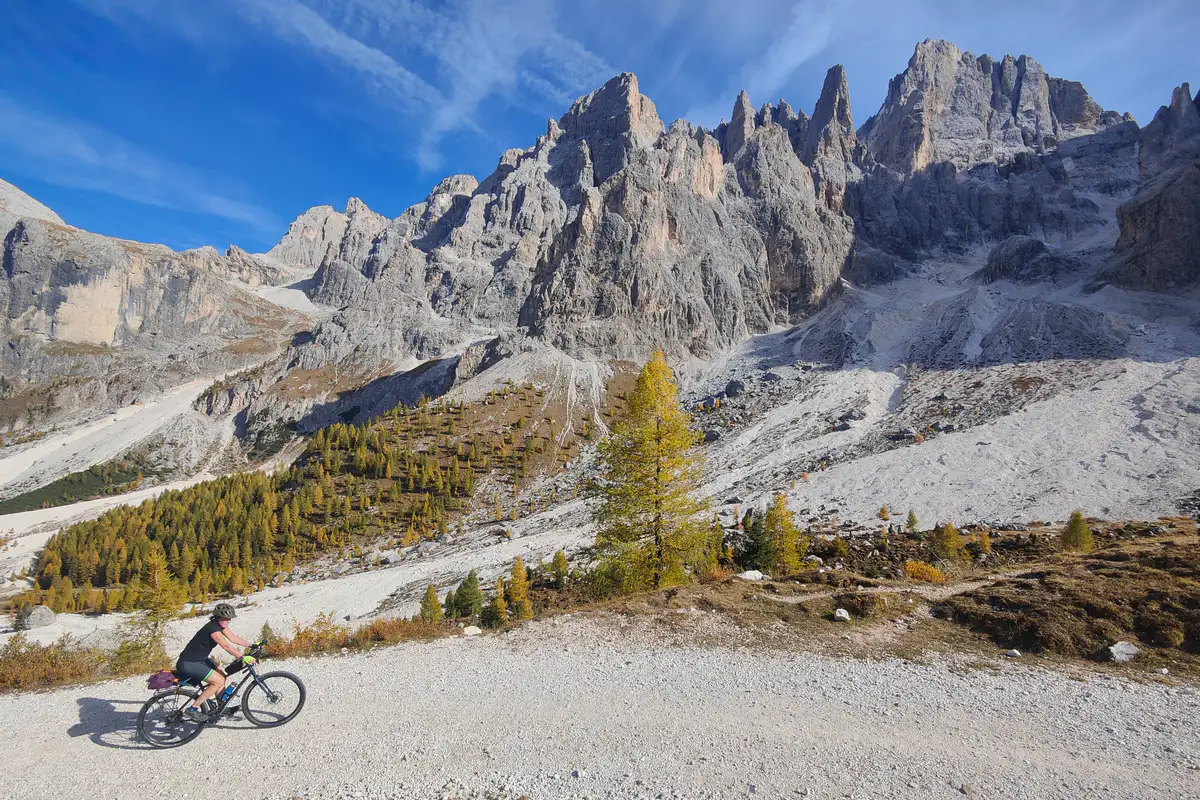
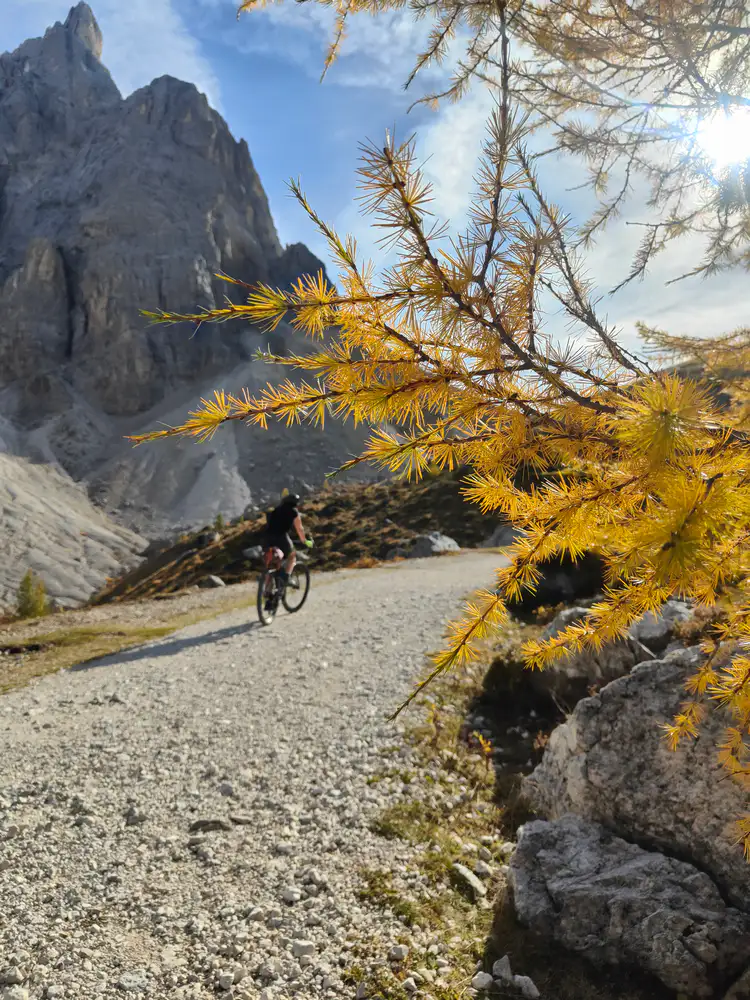
Under the clear, crisp autumn light, these mountains appear almost glowing—monuments of pure stone dominating the horizon. Stopping here is an almost mystical experience. The silence is broken only by the whisper of the wind sweeping across the ridges. It is the ideal moment to refuel and engrave in memory the majesty of a panorama that amply rewards every drop of effort spent along the previous climbs.
The Descent Begins: Capanna Cervino and Malga Juribello
After taking in the breathtaking view from Baita Segantini, it is time to get back in the saddle to begin the long, thrilling, and well-earned descent. The track initially unfolds along dirt roads and scenic routes that descend quickly yet smoothly, passing first next to the characteristic Capanna Cervino. Here, the gradient allows you to settle into a good rhythm while the scenery continues to shift, offering new perspectives over the surrounding valleys and forested slopes beginning to turn with the warm colors of the fading season.
Continuing the descent without reaching Rolle Pass, but veering right instead, you pass near Malga Juribello, another genuine jewel nestled among alpine pastures. The air here smells of hay and cheesemaking tradition. A bit further down the valley, the itinerary intersects the Rolle Pass state road once again, following it for a short stretch before turning back into the quiet of wild nature shortly before re-entering the Paneveggio area.
The Grand Finale: Lake Paneveggio, Travignolo Stream, and Sottosassa Canyon
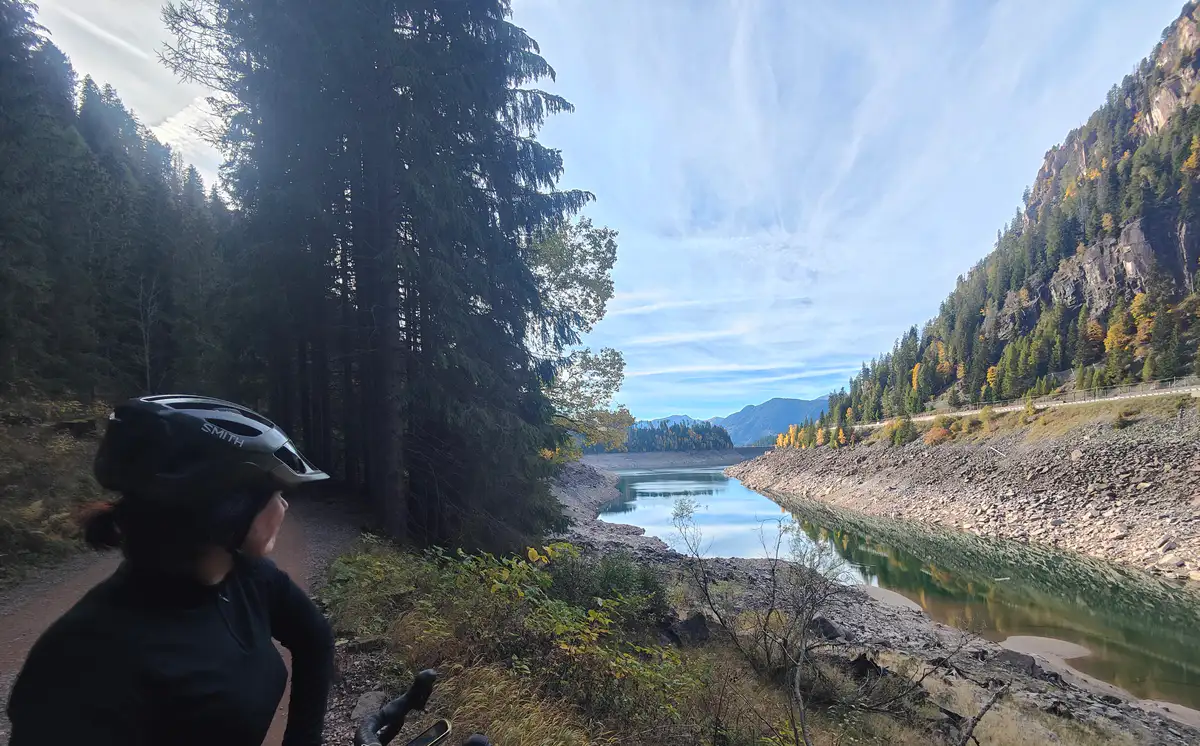
The final part of the loop still holds surprises and adrenaline. Instead of taking the easiest route, the choice is made to skirt the southern shore of Lake Paneveggio along a charming track that winds through dense, moist vegetation. From here, after a short climb, begins a spectacular and steep descent following the rushing, foaming course of the Travignolo stream.
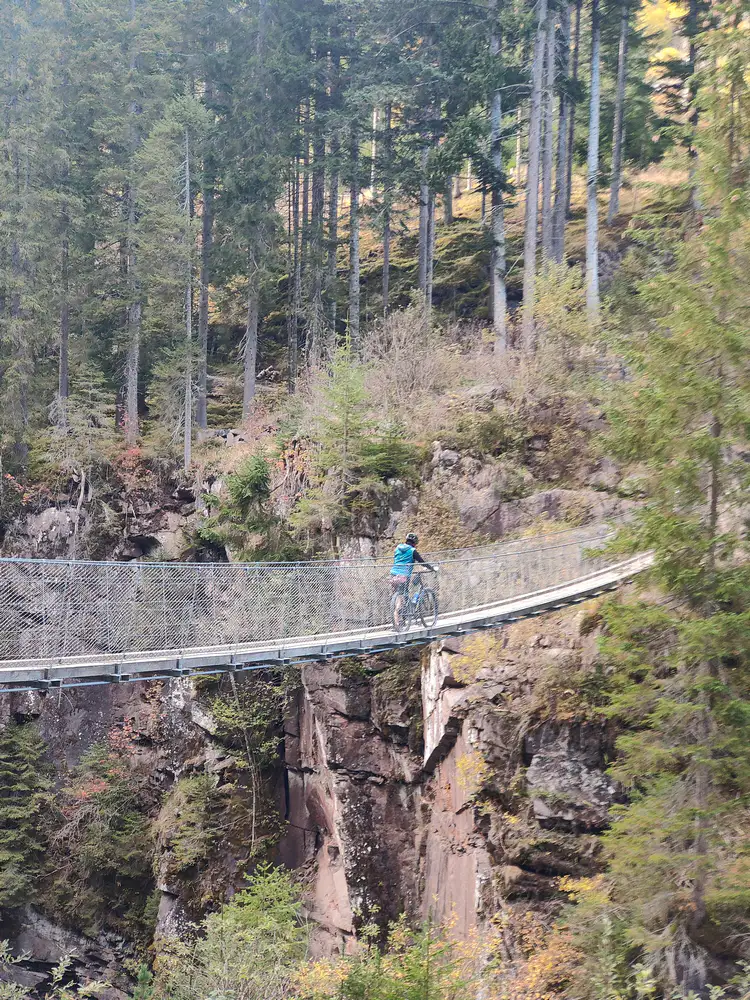
The water flows swiftly over smooth stones, creating rapids and waterfalls that echo through the valley like an ancestral symphony. To overcome a particularly rugged section and cross to the opposite side of the gorge, you come across a striking suspension bridge hanging over the void. This section must be completed strictly on foot, pushing the bicycle by hand. It is an experience that combines a touch of thrill with the wonder of being suspended between sky and earth, with the river roaring dozens of meters below.
Once across the bridge, you find yourself on the opposite bank to face the final, unforgettable passage of the tour: the atmospheric and deep Sottosassa Canyon. The track is often closed, but we finally found it open and passable, despite warning signs about passing at your own risk (as if responsibility belonged to someone else anywhere else! Ah well!).
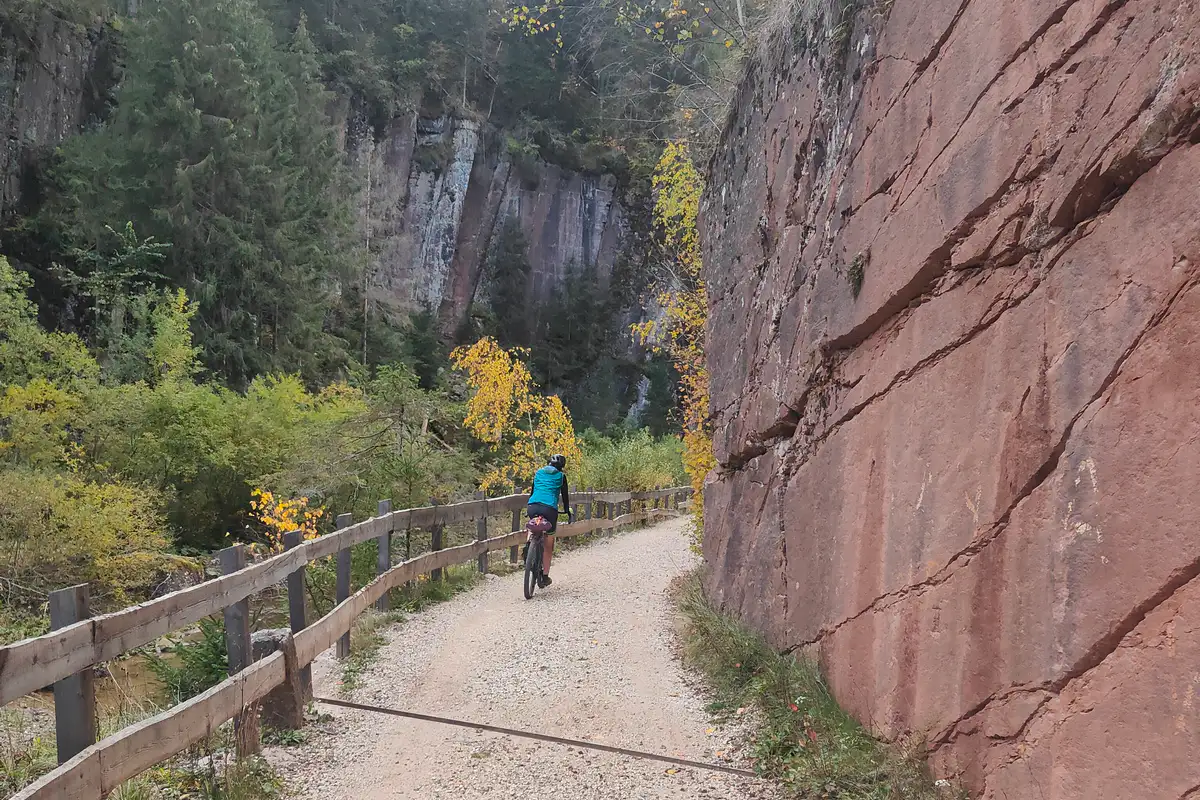
Here, the rock closes in around the trail, carved over millennia by the relentless power of water, giving the end of the route an almost epic, timeless atmosphere. With your wheels rolling smoothly back toward the starting point, you return to Predazzo with the awareness of having experienced an unrepeatable adventure—a perfect loop capable of capturing the most authentic, wild, and spectacular essence of the Dolomites in just a few hours.