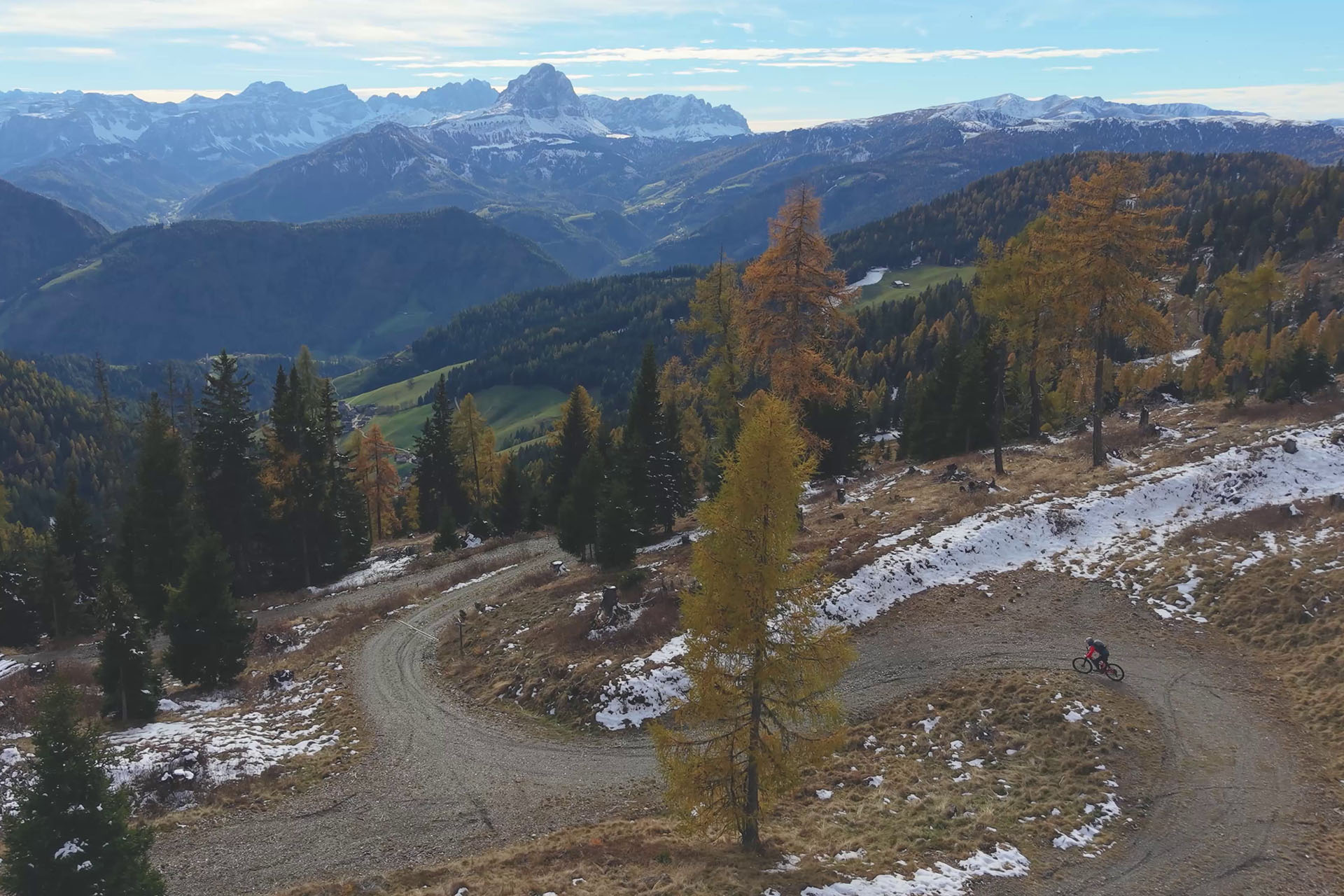

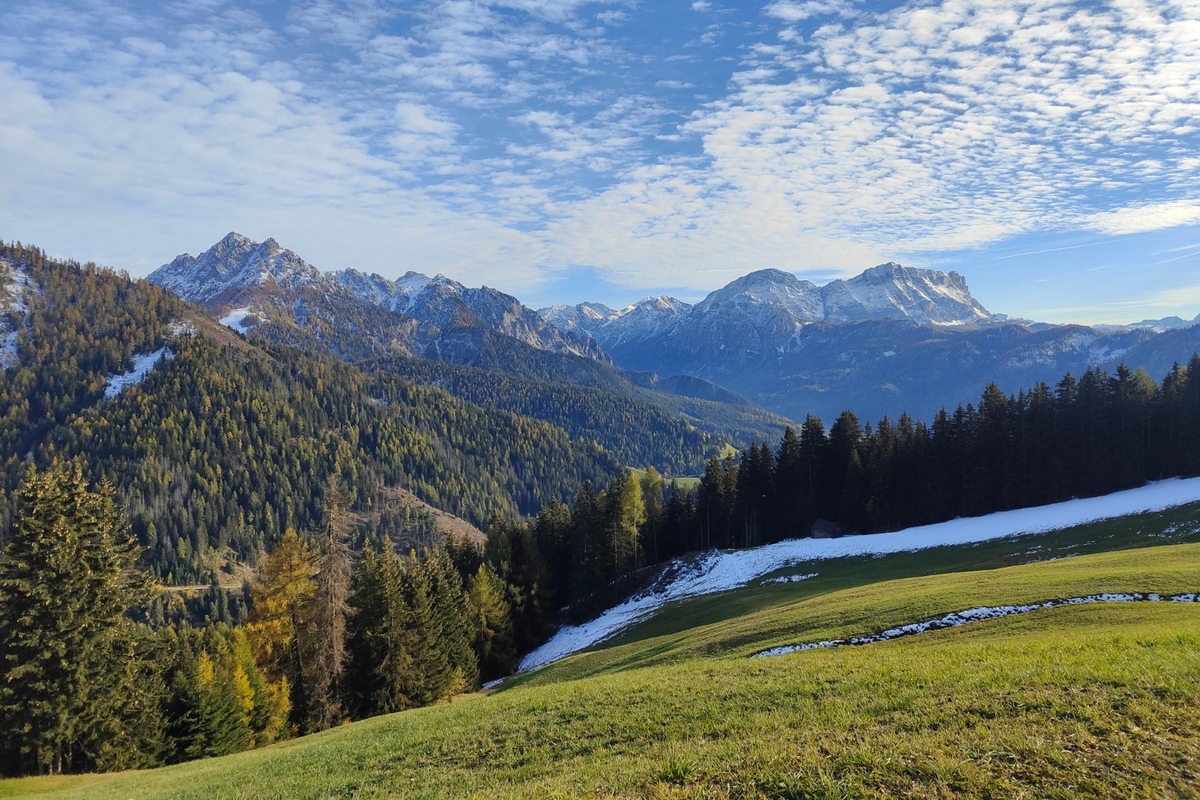
Among the valleys of South Tyrol, there are places capable of offering unforgettable views in any season, but autumn adds a very special magic. The larch forests turn gold, the air becomes crisp, and the first dustings of snow on the highest peaks create a spectacular contrast with the clear sky. On this ride, I went to explore one of the best-known and most spectacular scenic balconies in the Puster Valley: the summit of Plan de Corones (Kronplatz), following a loop itinerary starting and ending in San Lorenzo di Sebato (St. Lorenzen).
In this article
A varied route, demanding on the climb but immensely rewarding in terms of scenery, ranging from the border peaks of the Zillertal to the limestone walls of the Dolomites. If you are looking for an idea for an MTB trip in South Tyrol that combines training climbs, enchanted woods, and 360-degree panoramas, this is the itinerary for you.
Why take on this MTB itinerary
Riding a loop around the giant of Kronplatz allows you to experience a full day of mountain biking. Here is what makes this track special:
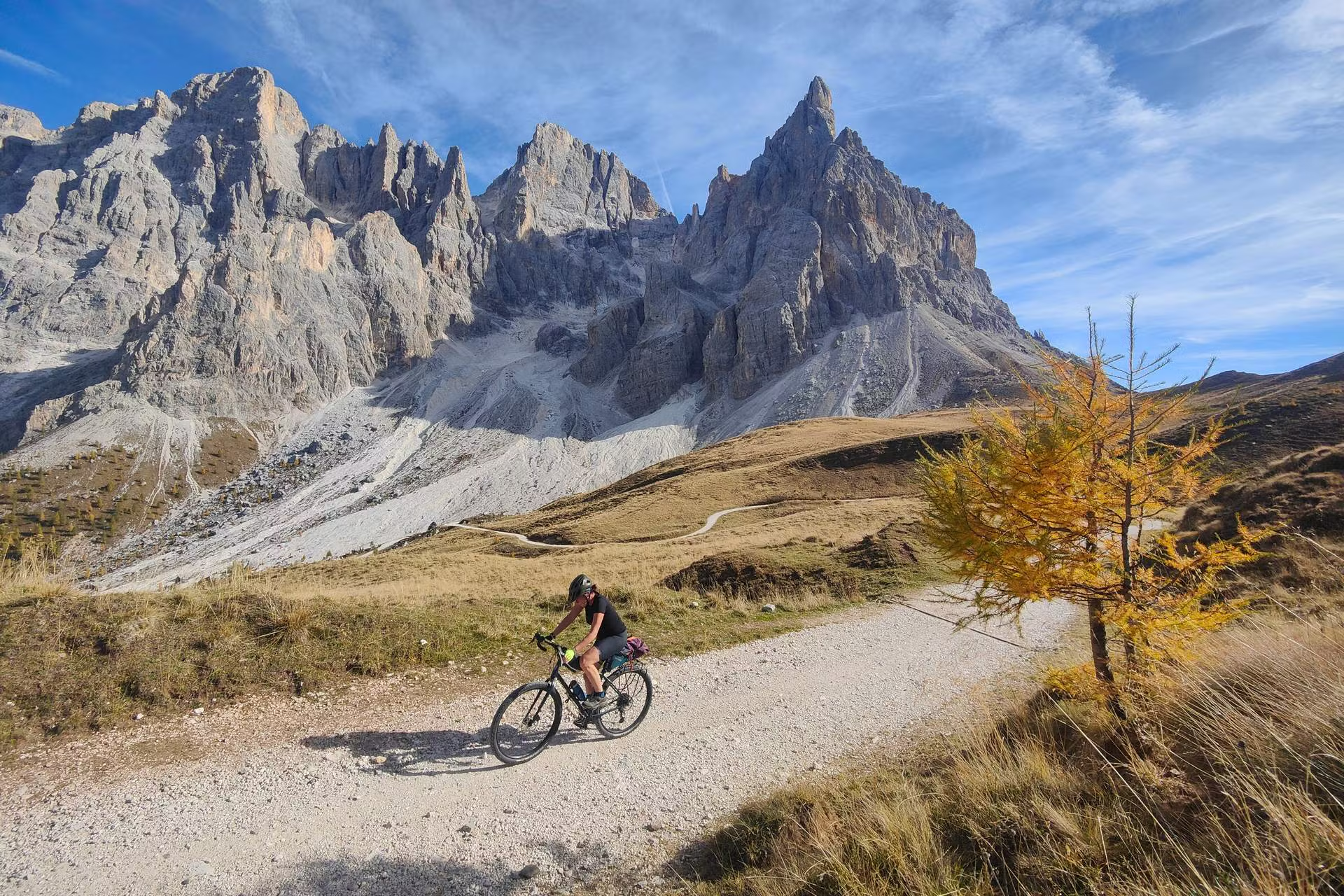
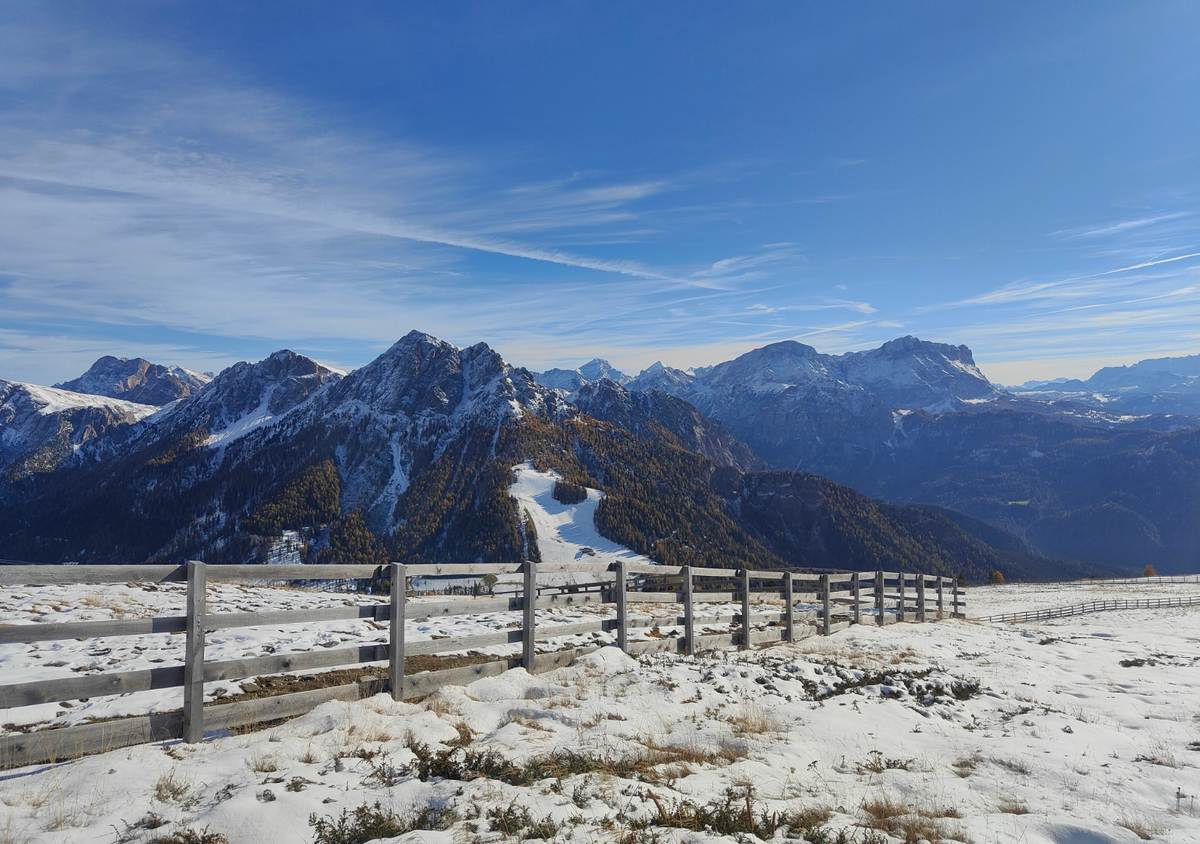
- Breathtaking 360° panoramas: from the summit, the view sweeps from the Zillertal Alps to the peaks of the Puez-Odle Nature Park and the Ampezzo Dolomites.
- Variety of terrain: you go from technical singletracks in the woods to wide and regular dirt forest roads, all the way to fun descent sections.
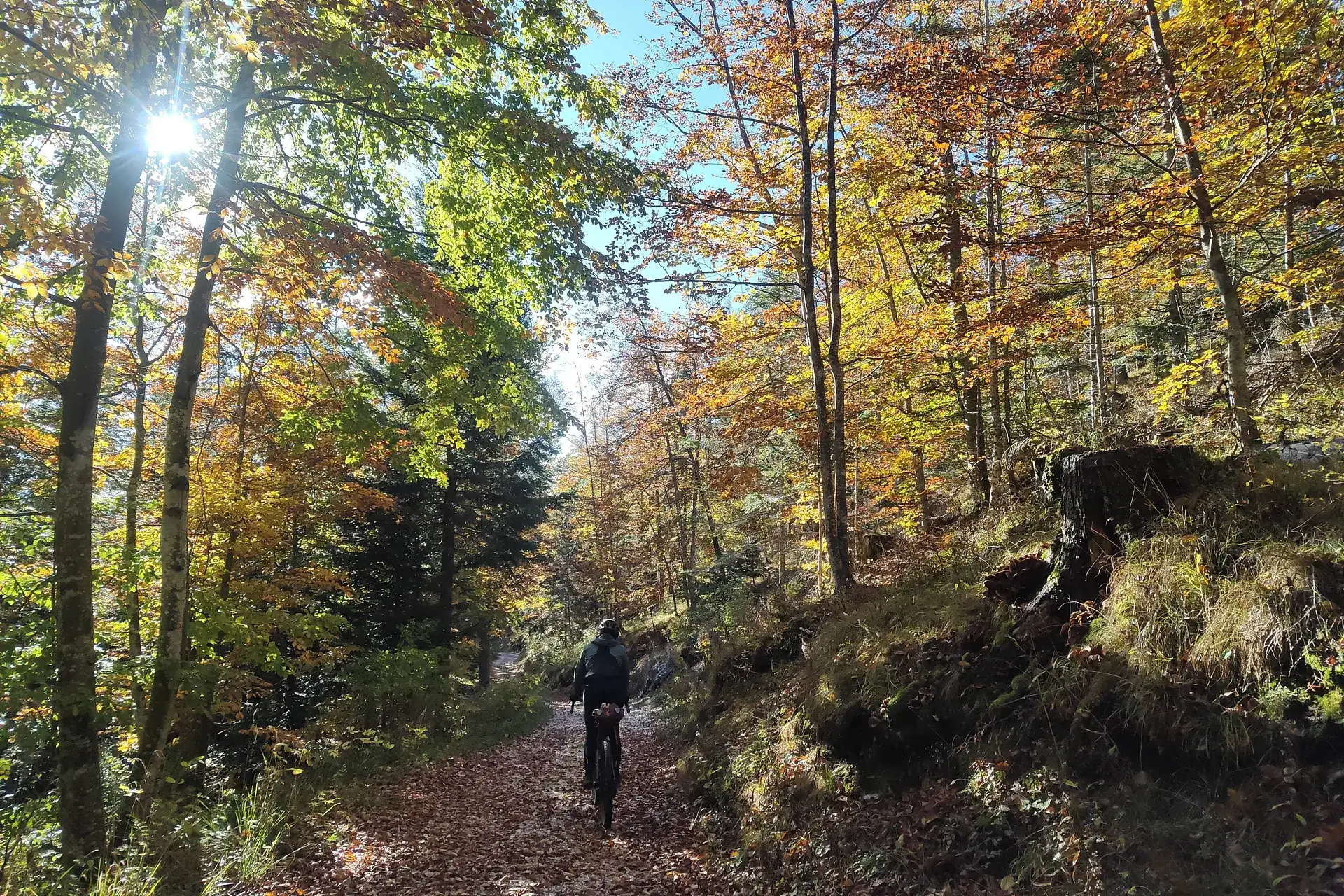
- Autumn colors: the climb immersed among fir trees and golden larches offers a unique and extremely photogenic atmosphere.
- The summit atmosphere: Plan de Corones is not only a ski destination, but a plateau rich in cultural and aesthetic charm even out of season.
From San Lorenzo di Sebato to Riscone: warming up through the woods
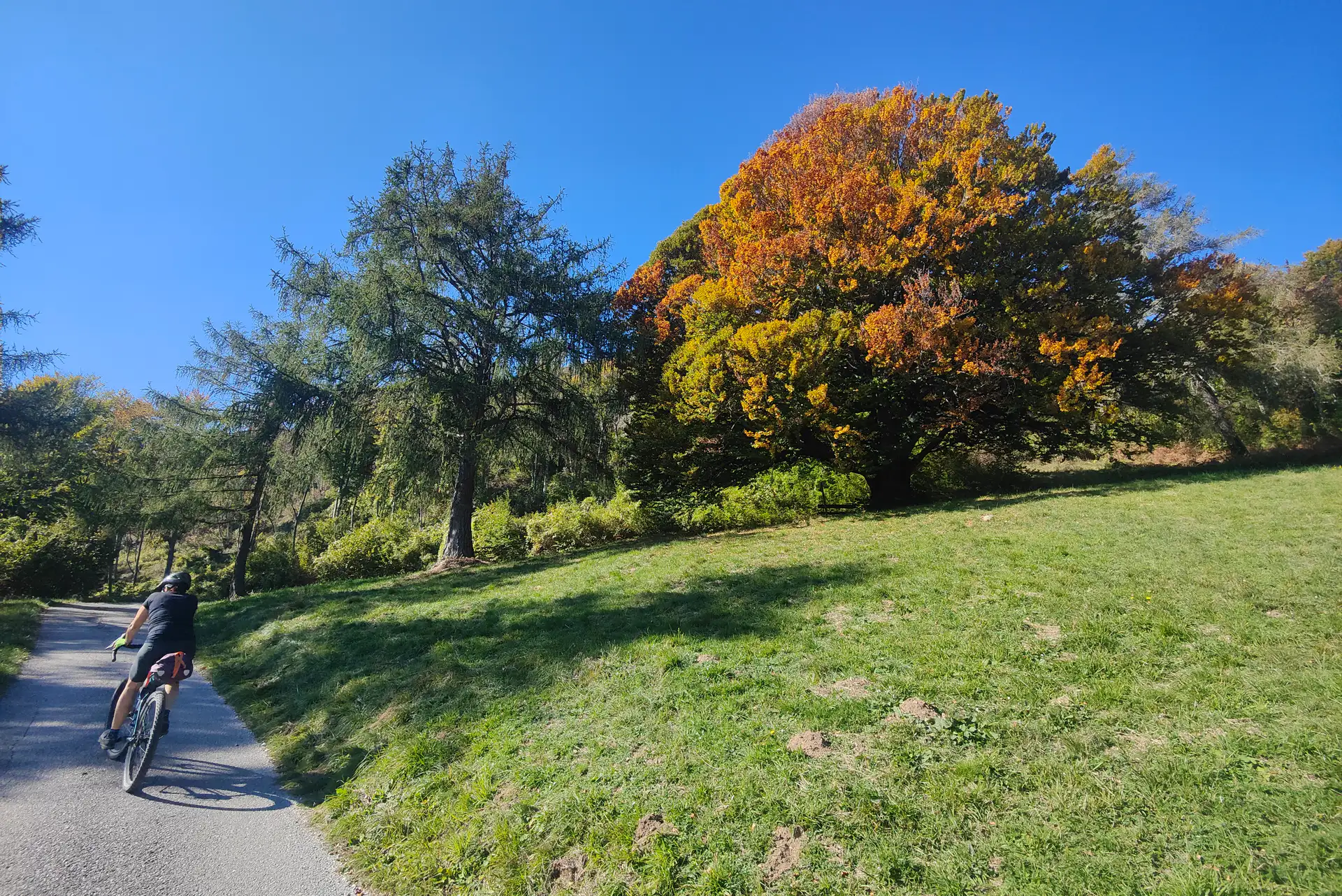
The starting point of our adventure is the characteristic village of San Lorenzo di Sebato, located a few kilometers from Bruneck, at the entrance to the Val Badia. Leaving the town center, you immediately join the convenient Puster Valley cycle path. The first section serves to warm up the legs and climbs at moderate gradients toward Santo Stefano.
The time spent on asphalt is short: leaving the main route, you immediately plunge into the wood. Here the track leaves the cycle path to turn into a series of fun, slightly uphill trails. The surface is compact, enriched by roots and some protruding stones that require maintaining a smooth and steady pedal stroke. It is the ideal beginning to get in tune with the bicycle and the natural environment, immersed in the refreshing shade of the trees until emerging near the hamlet of Riscone (Reischach).
Passing the valley station of the Kronplatz lifts — which in late autumn experience that suspended quiet preceding the start of the ski season — you intercept the dirt road that marks the true beginning of the ascent toward the summit.
The long climb toward the summit of Plan de Corones
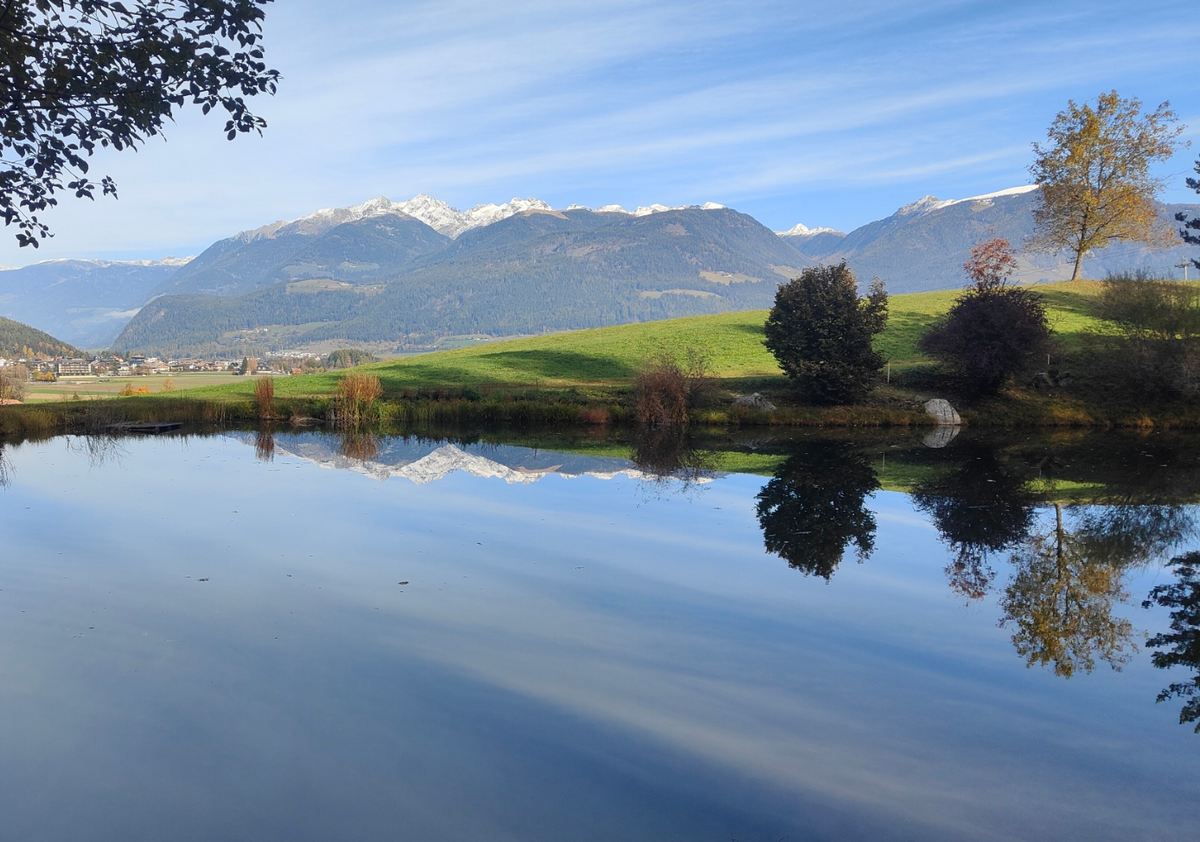
Past the lift area, the environment changes tone and the gradient begins to get more rigorous. The dirt road winds through the forest, making its way between two small, idyllic ponds whose mirrors of water reflect the warm colors of the surrounding trees. It is a perfect moment to catch your breath before tackling the main block of the climb.
From here on, the main forestry road awaits us, accompanying us faithfully for the next solid 10 kilometers. The gradient remains constant, requiring a steady pace and good energy conservation. You ride in an almost magical silence, broken only by the rolling of the tires on the dirt and the sound of your own breathing. Around us, the red spruces and larches painted in autumn gold create an extraordinary colored corridor.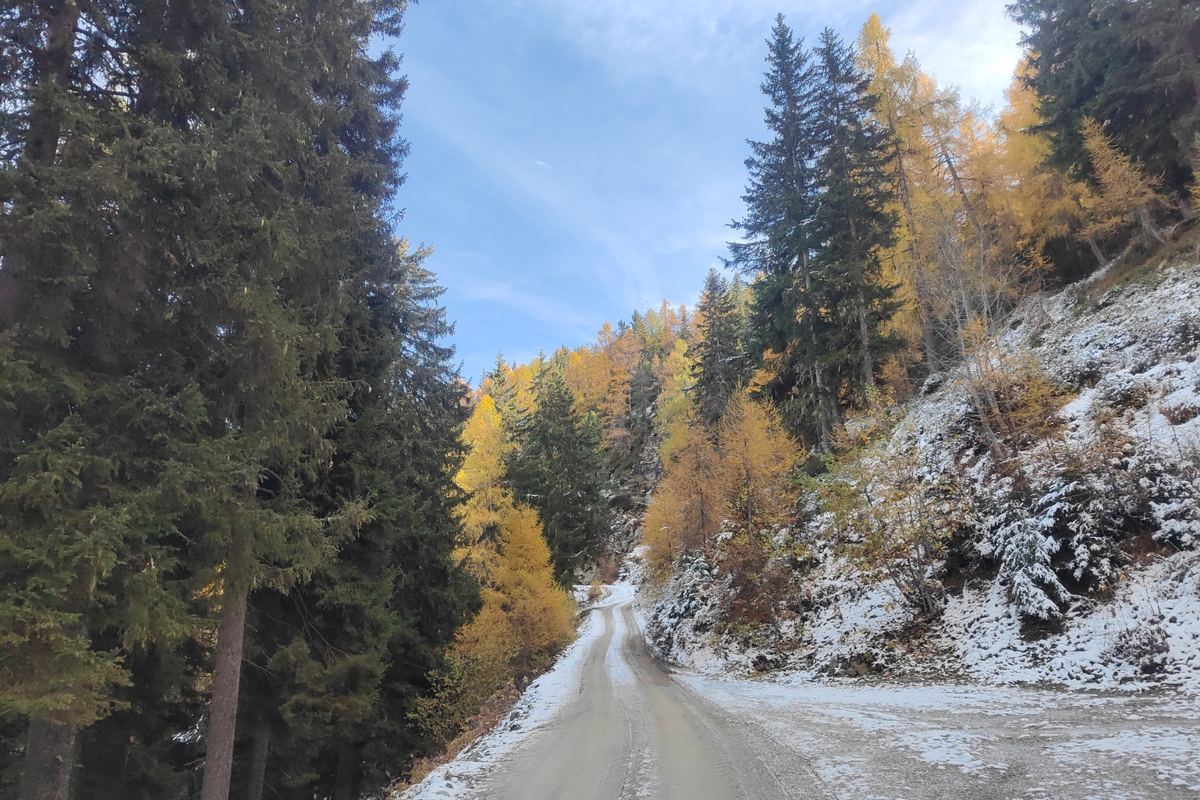
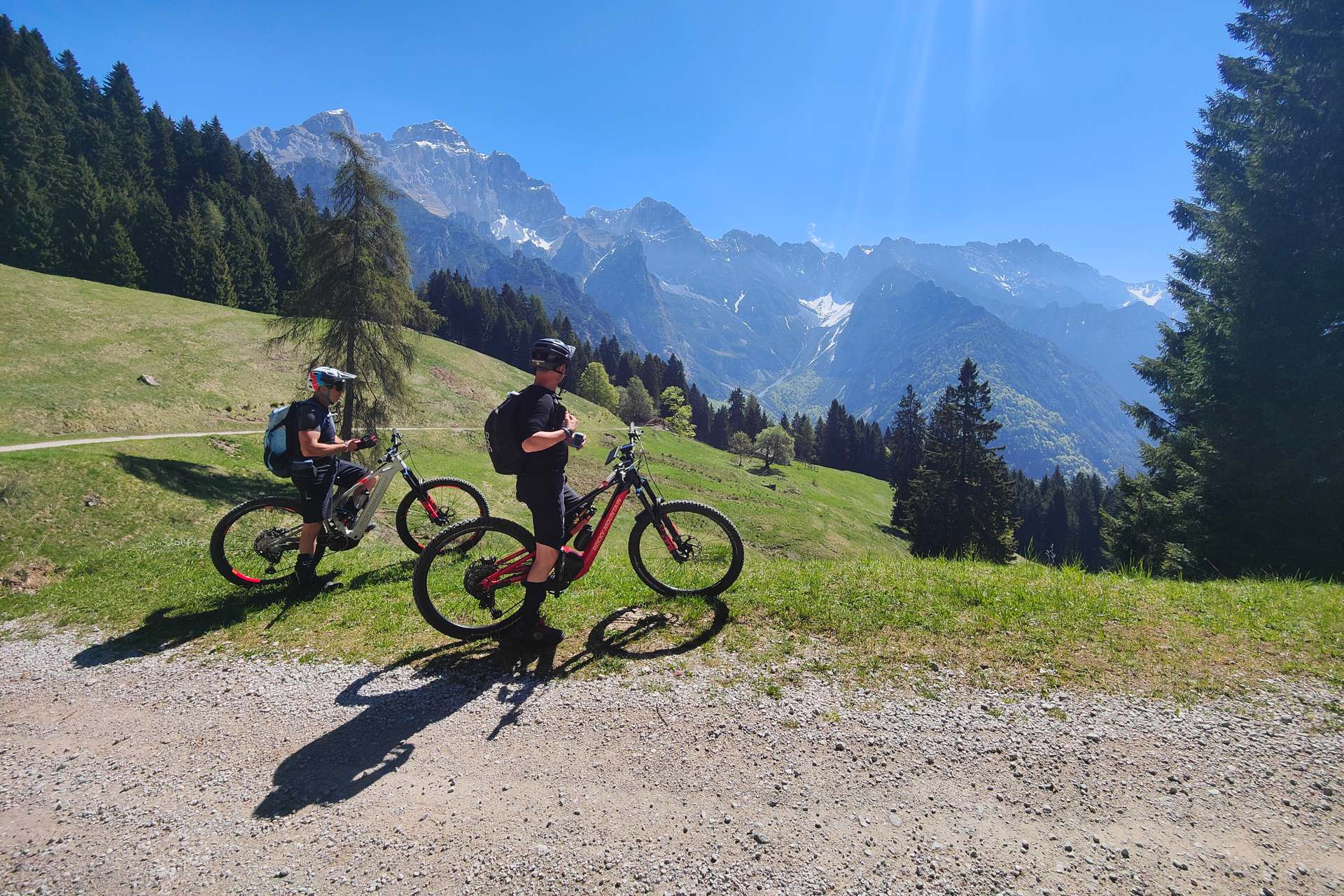
As altitude increases, the tall vegetation begins to thin out. Just before reaching the summit, the landscape behind us literally explodes: the view opens up to the north toward Austria and the imposing border peaks of the Zillertal, with the unmistakable silhouette of the High White (Großer Löffler / Gran Pilastro) acting as a sentinel on the horizon.
From the peak to Val Marebbe: panorama and first snow
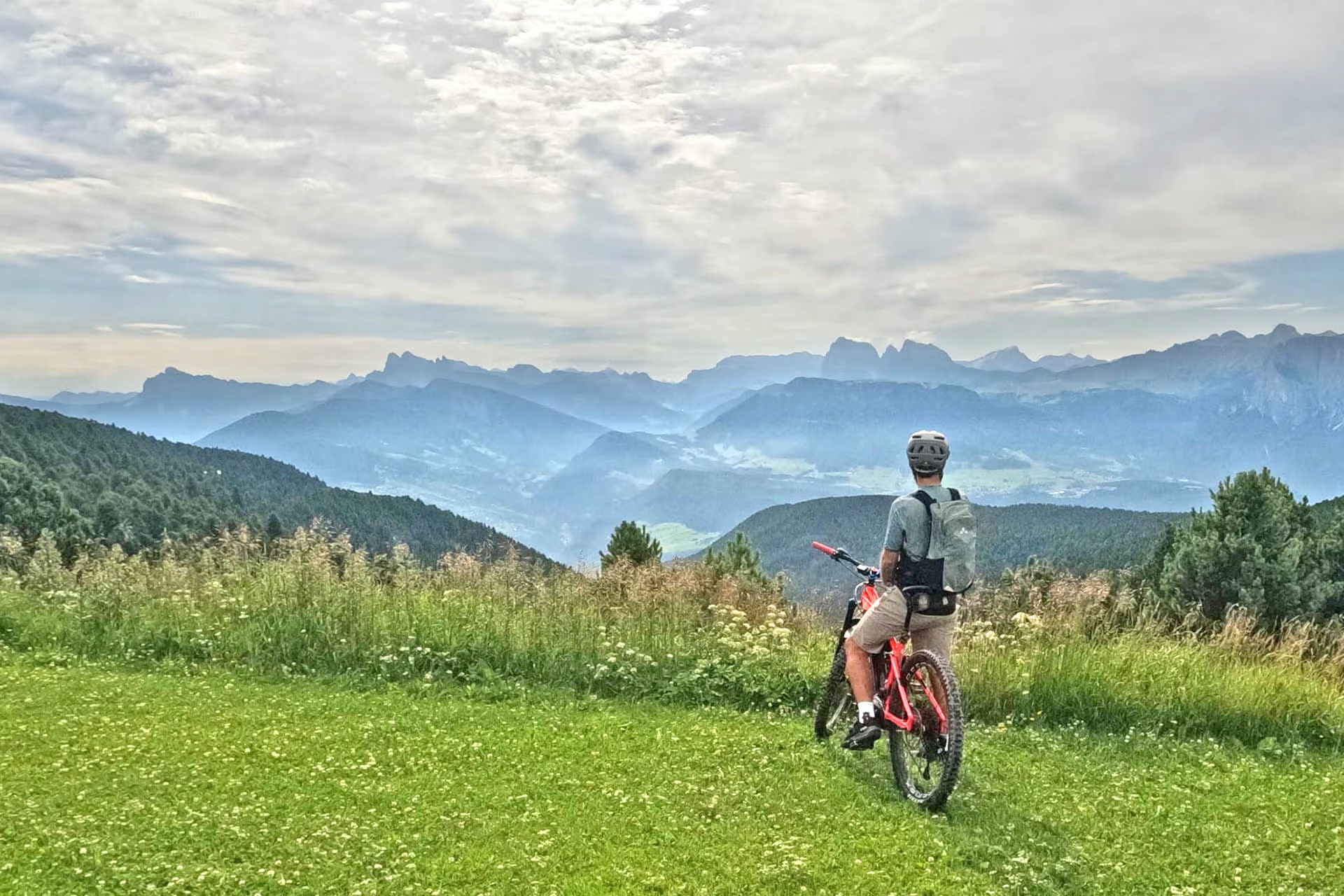
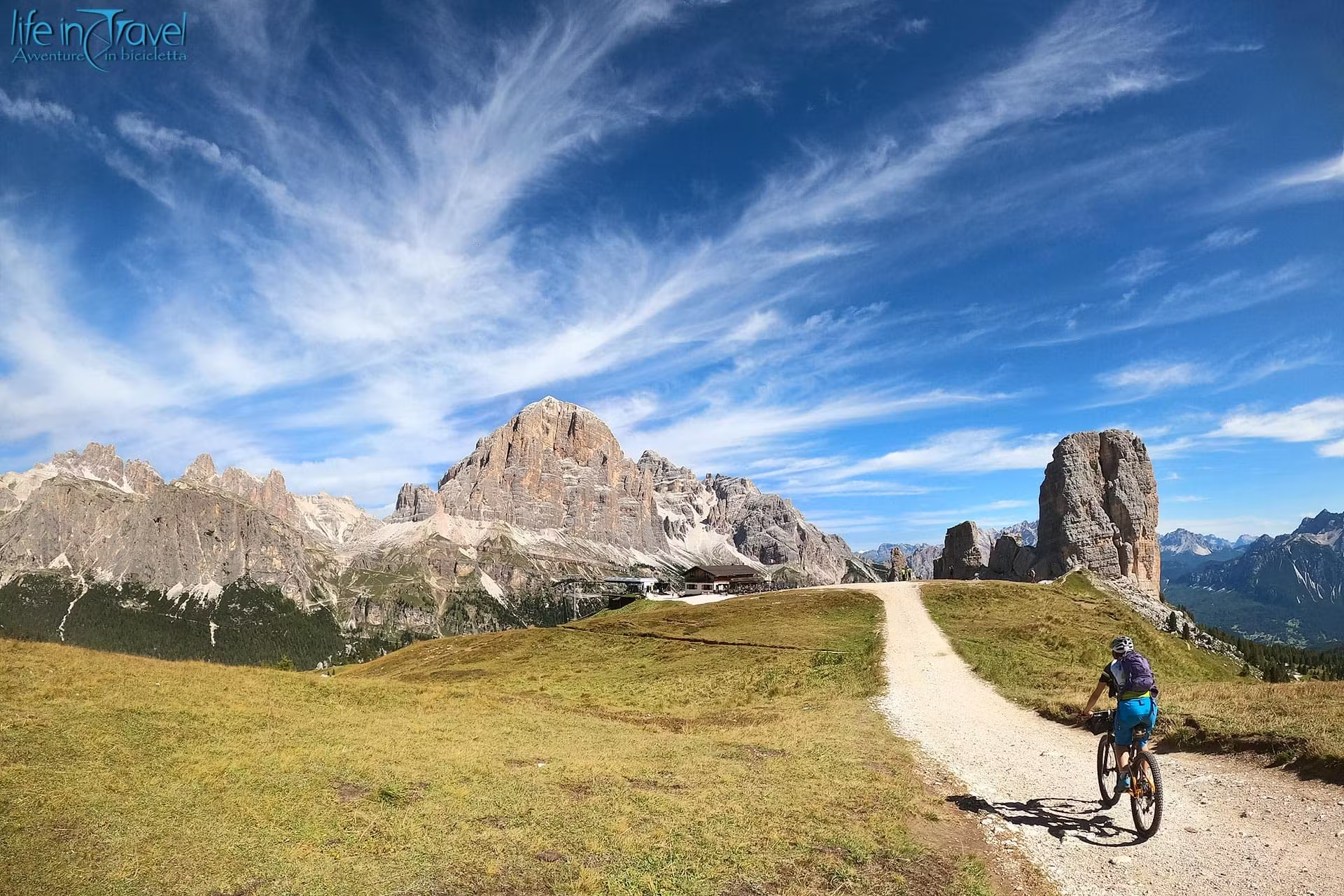
Conquering the summit of Plan de Corones (2275 m) rewards every single meter of accumulated elevation gain. The wide summit flatland offers a simply grandiose 360-degree panoramic view. To the east and south, the landscape is dominated by the vertical walls of the Dolomites: the unmistakable silhouettes of the Puez-Odle and Ampezzo Dolomites natural parks serve as a scenic backdrop for our break.
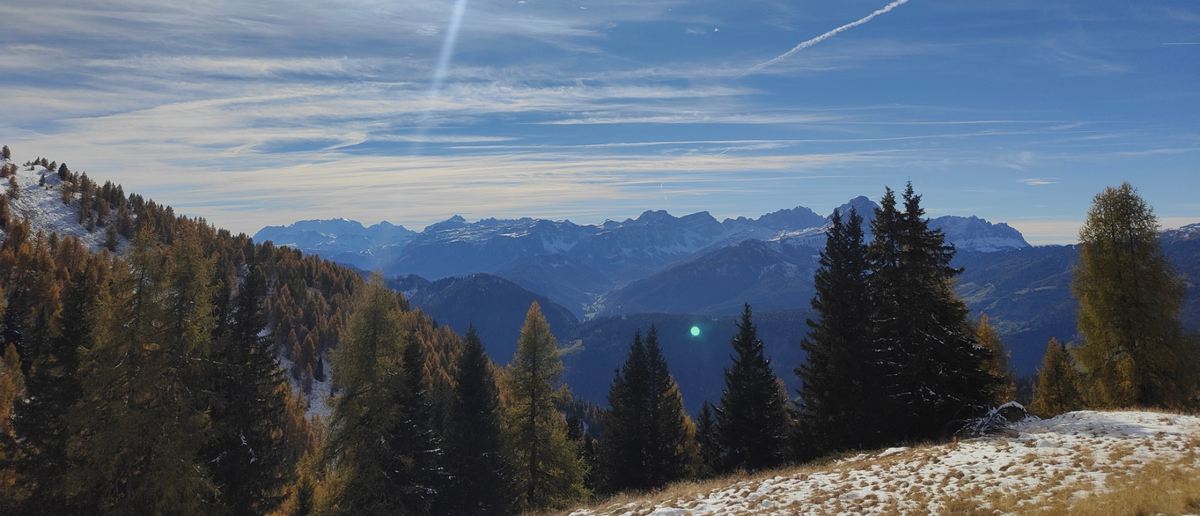
After enjoying the view and taking a refreshing break, it is time to gear up for the descent. Retracing your steps briefly along the climbing route, you soon spot the fork on the left that reveals the slope overlooking Val Marebbe.
The first section of the descent requires attention and utmost caution.
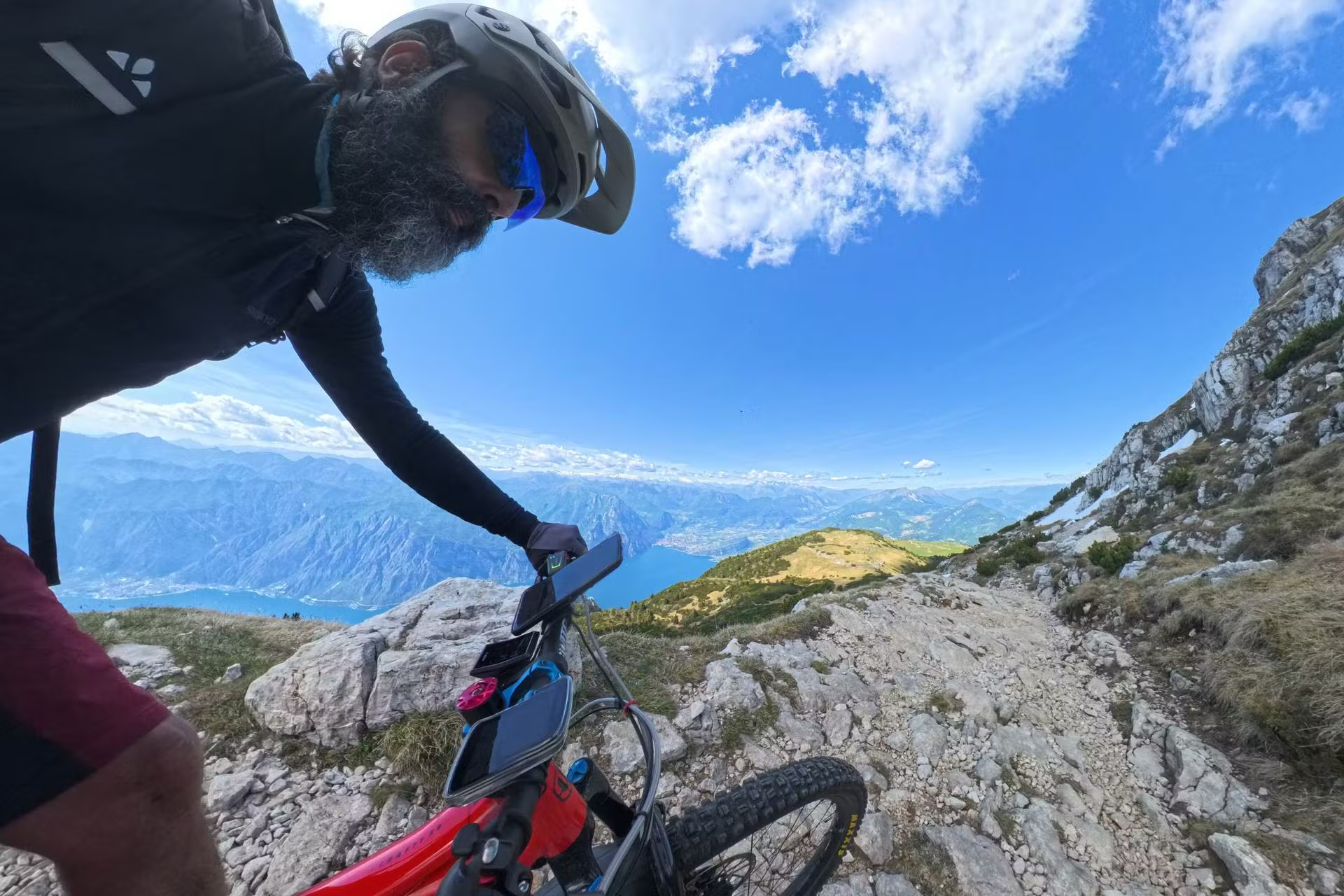
Being an autumn ride at an altitude above 2000 meters, the terrain presents the first traces of fresh snow fallen in previous days. The presence of mud and slightly icy patches requires clean riding, without sudden braking, to always maintain control of the wheels along the trail that descends progressively toward the locality of Frena — a decidedly evocative and appropriate name given the significant gradients of the slope!
The return loop: from Corn de Pezes to San Lorenzo
Once you intercept a nice forestry track again at the end of the technical section, the gradient stops being punishing and settles into a pleasant, smooth descent. However, the descent is not entirely without effort: the last rough patch of the day awaits us, a short but punchy climb that allows you to skirt the slopes of Corn de Pezes and head onto the panoramic trail.
Originally, the itinerary planned for a return toward Santo Stefano via the more direct and technical singletrack trail. However, actual terrain conditions required a quick on-the-field change of plans: the constant presence of accumulated fresh snow and insidious layers of ice in the forest's shade made me prefer the safer and more efficient solution. I thus chose to follow the easier and faster forest road leading toward Heidenberg.
From Heidenberg onward, the dirt road gives way to the asphalt ribbon of the secondary road. From here, a true fast plunge down to the valley begins: a guided, fun paved descent where you can let the bike roll effortlessly. In just a few minutes, you find yourself back at the valley floor, crossing through the first houses of San Lorenzo di Sebato to perfectly close this splendid MTB loop in the heart of the Puster Valley.
Practical tips for the excursion
If you wish to retrace this itinerary, here are some suggestions to best prepare for your outing:
- Recommended period: From late spring to mid-autumn. In late autumn, always evaluate the snow conditions at high altitude before setting off.
- Clothing: At the 2275 m summit, the wind can be very cold, and temperatures drop rapidly on the descent. Always bring a thermal windbreaker, long gloves, and layered clothing.
- Bike choice: A full-suspended mountain bike (both muscular and e-MTB) is ideal for safely tackling both the uphill dirt sections and the rough surface on the descent.