Gear ratio calculation and its development in meters (also known as roll-out), together with the gear range are often bypassed, especially by beginenrs or amateurs, when choosing the right bicycle. If you don't know what I'm talking about and you want some answers, take a look below at some information and the calculation tool.
In this article
What is the gear ratio calculation in a bicycle?
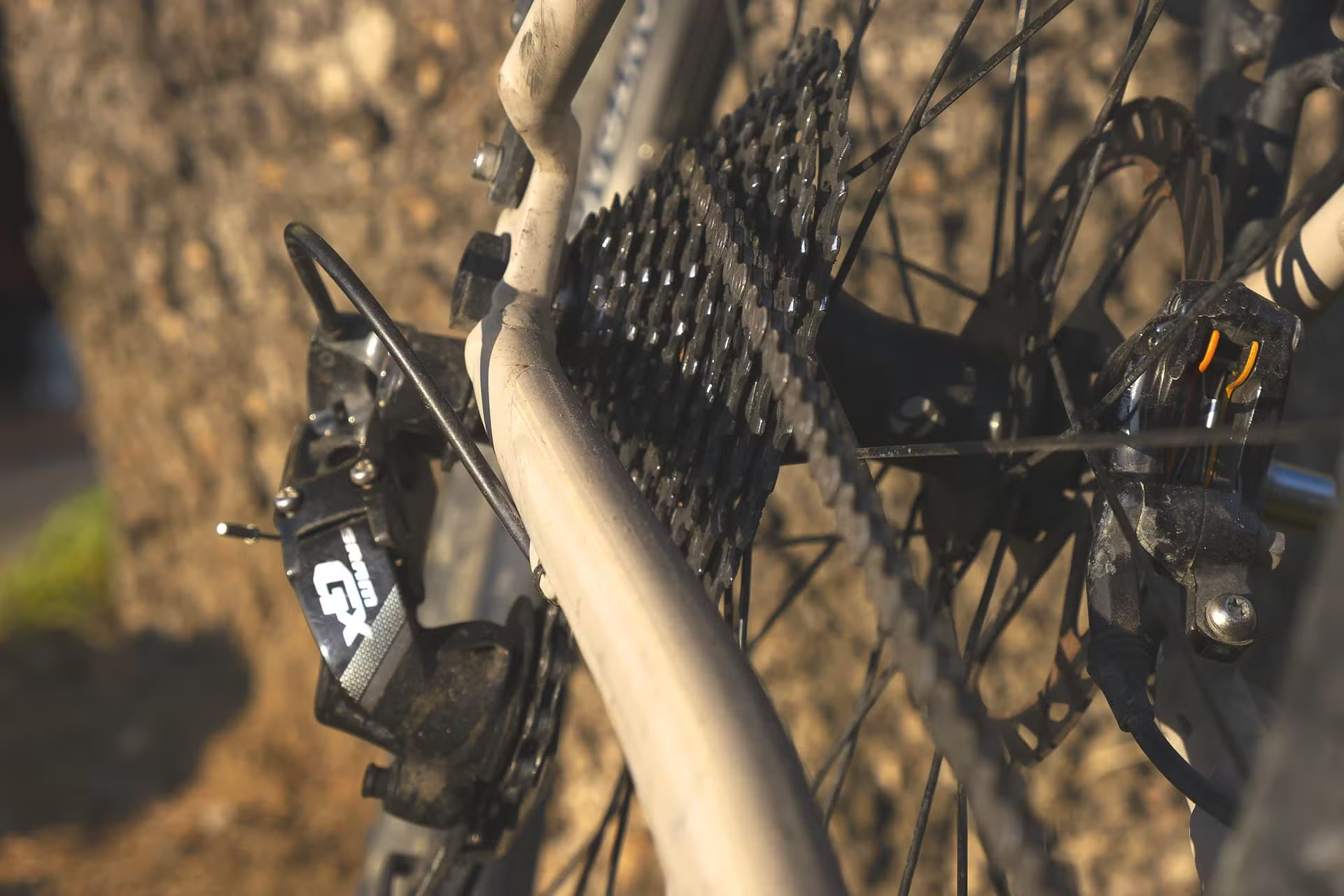
The combination of your chainring and cog determine the gear ratio. Gear ratio calculation, combined with the circumference of your wheel and tyre, determines how far you will travel with each revolution of the cranks.
This data is objective and not influenced by external conditions, such as friction, slope, weather conditions and cyclist's training condition or other external factors influencing the ride, which are not taken into consideration.
Gear ratio calculation and its consequent data, roll-outs, may help understanding how agile our ride is with that specific gear combination.
The lower a gear ratio and the roll-out are, the more agile the ride will be and the speed of the rider. 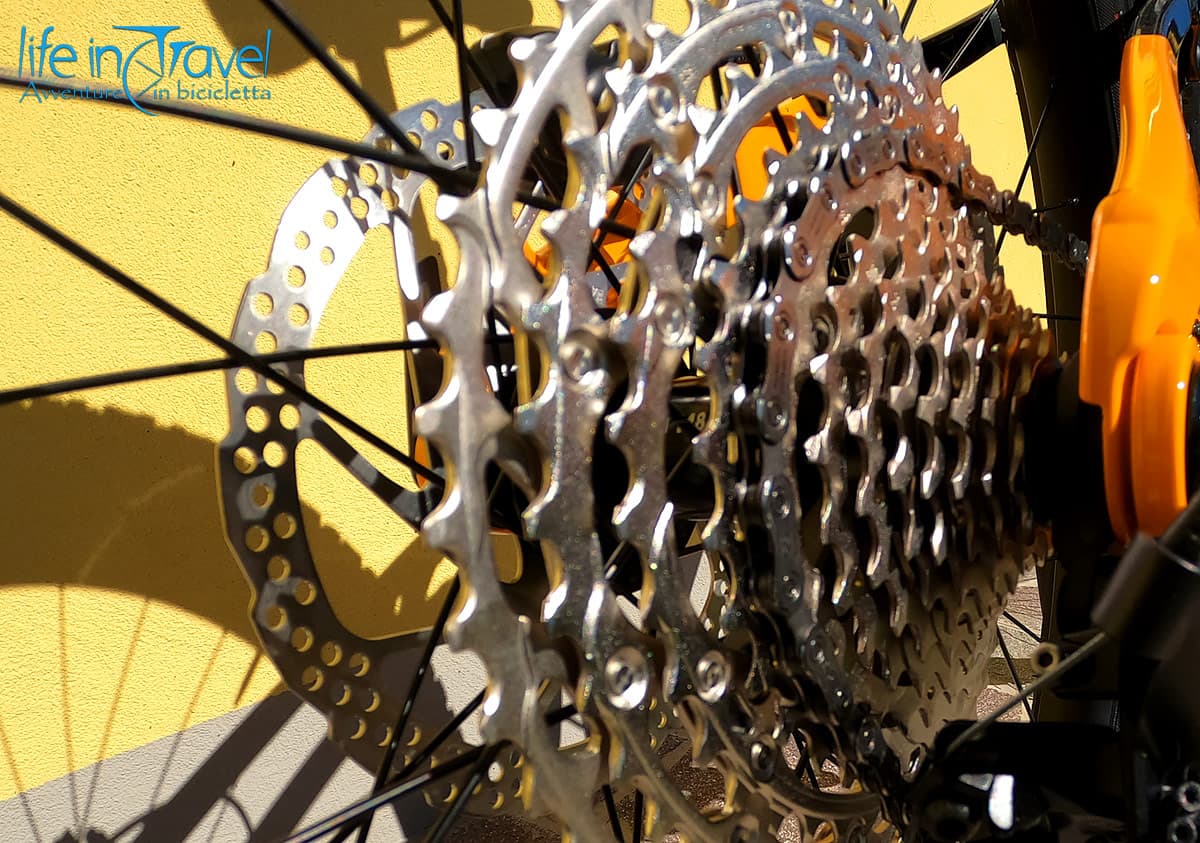
How can you obtain your gear ratio?
Basically, we can obtain gear ratio calculation (GR) and the final roll-out of a specific gear (S) with a simple 4-factors mathematic formula:
- number of the teeth on the cog (NTc)
- number of the teeth on the chainring (NTp)
- the size of the rim
- the width of the wheel
Gear ratio calculation is the first step:
GR = (NTc / NTp)
The last two elements listed above are used to determine the roll-out of specific gear. In order to obtain the final data, you will need the circumference of the wheel (measured in meters, Cr), which you can obtain (2πr) after having measured the radius of the wheel system (rim + wheel).
The final formula for the roll-out is:
S = GR x Cr
Gear ratio online calculator
Here you can find a mask to calculate the gear ratio of your bicycle:
Roll-out and gear range: the higher, the better
Gear range is a percent value allowing you the right choice depending on your riding style.
It is calculated by dividing the number of teeth of the biggest cog by the number of the teeth on the smallest; then repeat the same operation with the chainring. By multiplying the two results and the again x100, you'll obtain your gear range. Our Trek 920, one of the 2021 Trek bicycle touring bikes, has an 11x36 cassette, and a 42x28 chainring.
Its gear range will be: (36/11) 3,27 x (42/28) 1,5 x 100 = 491%.
The higher the range is, the more differentiated the roll-outs will be (from the hardest and the lightest gears): this means better adaptability to different terrains and cyclist's condition.
Pay attention, though. This range is a comparison between the smallest and the biggest gears while, especially on fully loaded touring bicycles it is very important to have a good range in the middle gears, to be used in every hard situation.
Online gear development calculation
Down below you can play with our tool to obtain your gear range calculation.